
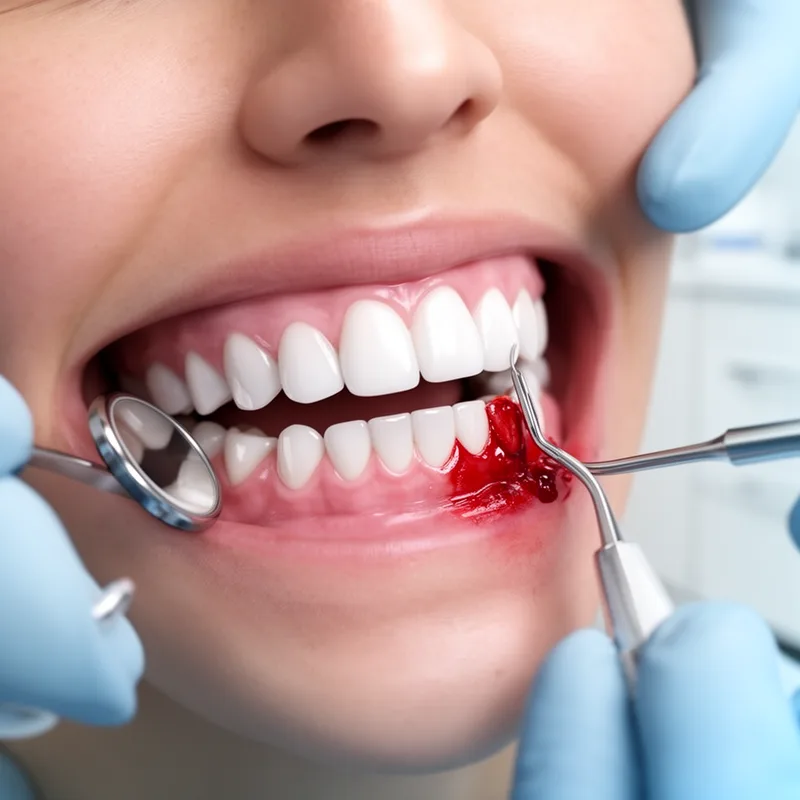
gingival


 1
8.8
- adjective
- /ˈdʒɪn.dʒɪ.vəl/
- Specialized
- Patients with probable cases showed more severe signs of the disease, including gingival bleeding (43%), epistaxis (36%), gastrointestinal bleeding (21%), neurologic signs (14%), and petechiae (14%).
- gingival bleeding
- gingival margin
Examples
-
Maintaining good oral hygiene is essential for healthy gingival tissue.
-
Brushing and flossing daily can significantly improve your gingival health.
-
Among American children, dental hygiene (and its effect on gingival health) is modestly successful at best.
Academic text (1990) -
Those at the gingival margin may cause the accumulation of plaque, making oral hygiene difficult and leading to secondary infection and pain.
Academic text (2000) -
A dental prosthesis, which extended over upper and lower gingival sulci and sealed the lips, was constructed.
Academic text (1992) -
After placement onto the implant, the preparation was adjusted to the adequate gingival margin design intraorally by the dentist.
Academic text (2016) -
Linear gingival erythema (formerly known as HIV-gingivitis) is a red band at the gingival margin in children or adults.
Academic text (2000) -
It was observed that the oral hygiene and gingival inflammation levels of the students were suboptimal, but not atypical of children.
Academic text (1990) -
Dental cleanliness and gingival health in children are definitely related (Horowitz, 1980; McDonald, Avery, & Weddell, 1987).
Academic text (1990) -
An herbal toothpaste made from herbs and plants traditionally used to treat oral disease in India was superior to a placebo toothpaste in the treatment of gingival bleeding and oral hygiene.
Blog text (16)
Surface Forms
Morphology
Etymology
Gingival comes from the Latin word gingiva, which means 'gum', the soft tissue around your teeth. So, gingival simply means 'relating to the gums', as in 'gingival bleeding' or 'gingival inflammation'.