
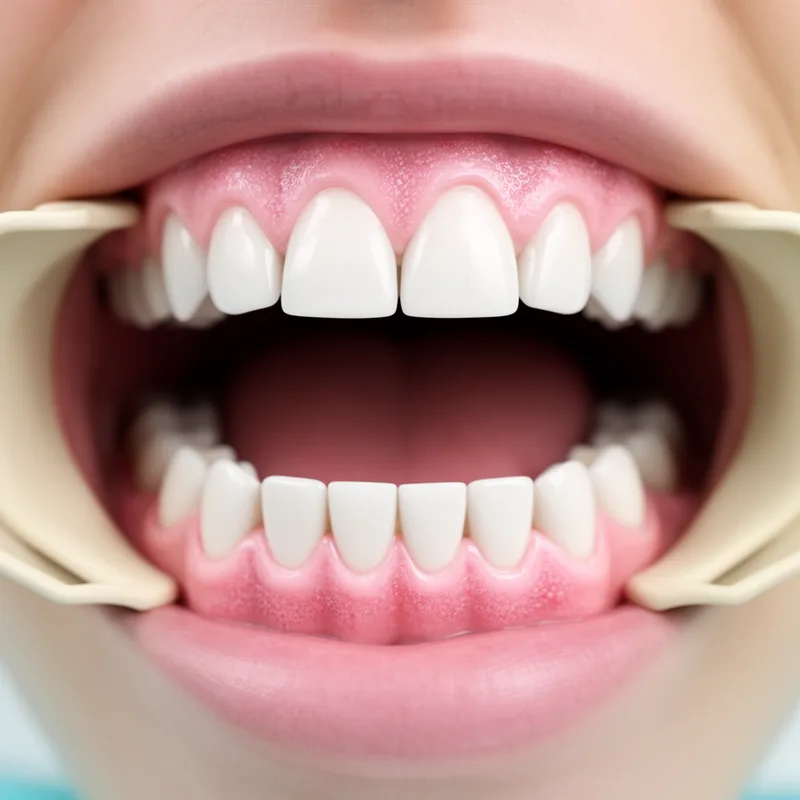
gingiva
- noun
- /ˈdʒɪn.dʒɪ.və/
- Specialized
- The dentist examined her gingiva and noted signs of inflammation around the teeth.
Examples
-
Physical examination revealed active bleeding from the gingiva over the right mandibular molar.
Academic text (2003) -
It has occurred as an extraosseous lesion in the gingiva and the auricle.
Academic text (2006) -
The gingiva and buccal mucosa are affected most often, but palatal lesions are not uncommon.
Academic text (1996) -
Her physical examination revealed a slight discoloration of the maxillary gingiva and mobility of the right second maxillary molar.
Academic text (2003) -
Such malignancies have been reported in the salivary glands, gingiva, floor of the mouth, palate, buccal vestibule, and bone of the maxilla and mandible.
Academic text (2008) -
Proper dental care is essential to maintain healthy gingiva and prevent gum disease.
-
After the procedure, patients may experience sensitivity in their gingiva as they heal.
Synonyms

 57
1.0
57
1.0

The firm pink tissue around the bases of the teeth
Surface Forms
Etymology
Gingiva comes from Latin and means 'gums', the soft tissue that surrounds your teeth. A helpful way to remember it is to think of the related word gingivitis, which is a gum problem—both words are about the tissue that holds and protects your teeth.