

giant willowherb
- noun
- /ˈdʒaɪənt ˈwɪloʊhɜrb/
- US
- The giant willowherb flourished quickly in the areas that had been recently cleared by wildfire.
Examples
-
Local beekeepers plant giant willowherb near their hives to boost honey production.
-
Bees are attracted to the giant willowherb due to its rich supply of nectar.
-
The giant willowherb blooms beautifully in late summer.
-
Many gardeners appreciate the giant willowherb for its vibrant flowers.
-
Bees are attracted to the giant willowherb due to its rich supply of nectar.
-
Local beekeepers plant giant willowherb near their hives to boost honey production.
-
The giant willowherb flourished quickly in the areas that had been recently cleared by wildfire.
Synonyms

 1
7.5
1
7.5

A plant that quickly grows in burned areas, often with tall pink flowers

A tall plant with narrow leaves and pink flowers that grows after a fire

A tall plant with narrow leaves and pink-purple flower spikes that grows after fires and feeds bees
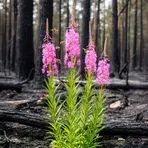
A tall wild plant with narrow leaves and spikes of pink flowers that often grows after fires and attracts bees
Surface Forms
Morphology
The meaning 'a very large willowherb plant' is directly derivable from combining 'giant' (notably huge) with 'willowherb' (a flowering plant). Adjective + noun composition is a common, predictable pattern, so a B1 learner who knows both constituents would readily infer the MWE's meaning.
Etymology
Giant willowherb comes from how the plant looks: willow points to its long, narrow leaves like a willow tree, herb means 'plant', and giant shows it grows very tall. That's why the name fits a tall, flower-rich plant that bees love for nectar.