

Epilobium angustifolium
- noun
- Specialized
- Beekeepers prize Epilobium angustifolium for its rich nectar, making it an important honey plant.
Examples
-
Hikers in North America often see Epilobium angustifolium thriving in areas recovering from wildfires.
-
Epilobium angustifolium quickly colonizes open ground after a forest fire, giving rise to large fields of pink blossoms.
-
The Epilobium angustifolium thrives in disturbed soil.
-
Have you seen the Epilobium angustifolium blooming in the forest?
-
Epilobium angustifolium, commonly known as fireweed, is often the first plant to bloom in areas that have been burned by wildfires.
-
Beekeepers prize Epilobium angustifolium for its rich nectar, making it an essential source of honey in the summer.
-
Hikers frequently encounter Epilobium angustifolium while exploring the lush growth that follows forest fires in North America.
Synonyms

 1
7.5
1
7.5

A plant that quickly grows in burned areas, often with tall pink flowers

A tall plant with many pink flowers that bees like

A tall plant with narrow leaves and pink flowers that grows after a fire
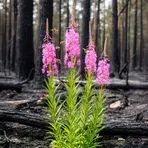
A tall wild plant with narrow leaves and spikes of pink flowers that often grows after fires and attracts bees
Surface Forms
Morphology
Epilobium + angustifolium
This is a Latin scientific binomial (genus + specific epithet) rather than a compositional English phrase; the second element 'angustifolium' is not an English word in the provided data, so a B1 learner who knows the listed constituents cannot infer the common meaning 'fireweed' or the plant description. Taxonomic names are language-neutral labels used across languages but require botanical knowledge, making the expression unpredictable from ordinary vocabulary knowledge.
Etymology
Epilobium angustifolium, often called 'fireweed', got its common name because it is one of the first plants to grow on land after a fire. The bright pink flowers spread quickly across burned ground, so the parts fire and weed help you remember it appears after fire and starts new plant growth.