

ghostly
 40
4.7
40
4.7

- adjective
- /ˈɡoʊstli/
- As the fog rolled in, the trees took on a ghostly appearance in the moonlight.
- a ghostly presence
- ghostly white
- a ghostly shadow
Loading YouTube…
Watch on YouTubeAnd I think that you can see this like kind of blue ghostly cast on me.
- And I think that you can see this like kind of blue ghostly cast on me.
- We had quite a hike to our next ghostly location.
- We were seeing things in the home that you would think of as like ghostly maybe, but it was all the same stuff.
- And Sue's face goes ghostly white.
- Then came the visitations, ghostly face sheathed in the wrinkled visage of an old man.
- And he's already white ghostly Casper arrives.
- This again was supposed to look natural, but obviously it really doesn't, especially against the white ghostly white skin.
- Well, there's some instances where we see apparitions that I believe are ghostly apparitions that have been quite real, but I believe they're satanic.
- We talked about empty seats at Trump rallies and mentioned some long list of ghostly type characters.
- Keep that in there because I keep a baked bronzer from elf in my purse just in case I'm looking a little like a ghostly one day.
Examples
-
The sun begins to set, and a ghostly silence envelops the mountain.
Academic text (2009) -
The shadows grew long, as the sun kissed the western horizon, casting a ghostly glow over our fearless protagonist.
-
And I think that you can see this like kind of blue ghostly cast on me.
-
We had quite a hike to our next ghostly location.
-
But I think it's this kind of lovely ghostly reminder of his presence and impact.
-
Only ruins remained ghostly under the sea until even these were covered by mud and lost.
-
In the twilight, the room seemed ghostly, a place where no living creatures moved.
Fiction book (1990) -
Wandering the ghostly gardens, she contemplated the pomegranates that hung heavily on their branches.
-
Dim yellow mist curled about her; she was a ghostly shadow, haloed in smoke.
Fiction book (1993) -
A new neutrino observatory has begun looking for the ghostly particles from the vantage of Earth's South Pole.
Academic text (2000)
Synonyms
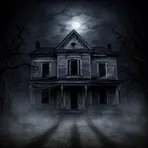 96
3.2
96
3.2
Strange and frightening in a way that makes you feel nervous, like a ghost
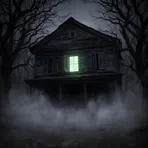 91
5.1
91
5.1
A strange, frightening feeling as if ghosts are nearby
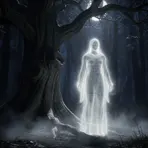 28
7.0
28
7.0
Appearing like a ghost
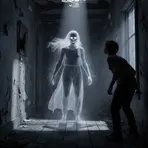 5
7.5
5
7.5
Looking like a ghost and causing fear
 1
6.5
1
6.5
Having a pale, thin, and quiet appearance that feels spooky
 1
9.9
1
9.9
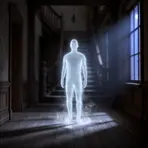
Looking like a ghost and seeming unreal

 1
9.9
1
9.9
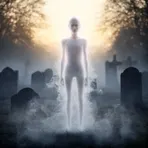
Having the look or feel of a ghost
 1
9.9
1
9.9
Having a thin, ghostlike appearance

Appears like a ghost, not solid or easy to see

Having a quality like a dream or a ghost that seems unreal

Being unreal and like a dream
How Ghostlike

Surface Forms
Morphology
Etymology
The word ghostly comes from the old English word ghost, which meant 'spirit' or 'soul', plus the ending -ly that turns a noun into a description. So, ghostly means 'like a ghost', which is why we use it for things that seem pale, quiet, or strange.