

geta
- noun
- /ˈɡeɪtə/
- We showed the children actual geta, and they put them on and walked about on a hard surface.
Examples
-
I put on geta and led him out to the henhouse, where we had set a charcoal brazier to warm the air for the hens.
Fiction book (1998) -
Do you like to walk in geta?
Academic text (1995) -
Depending upon the quality of the geta, the shoes are made of various types of wood.
Academic text (1995) -
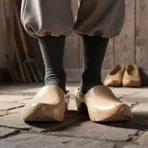
Did the picture of the geta help you understand what it might feel like to wear them?
Academic text (1995) -
As a matter of fact, the wearing of geta in public places such as hotels is discouraged and often prohibited.
Academic text (1995) -
We used an alternative, inquiry-type approach when we introduced geta, which are a type of Japanese footwear.
Academic text (1995) -
Is "koro, koro, koro" a good description of the sound geta make when the wearer is walking on a hard surface?
Academic text (1995) -
Originally called ta (paddy) geta, the shoes were wooden planks that the farmer strapped to his feet to keep out of the mud as he worked in the rice field.
Academic text (1995) -
I wore my geta to the festival, where many people appreciated traditional Japanese attire.
-
Walking on the wooden boards of the geta made me feel connected to Japanese culture.
Synonyms

 14
4.9
14
4.9

A shoe with a thick wooden sole and sometimes an open heel
 3
9.9
3
9.9
A wooden shoe worn in parts of Europe
 3
9.9
3
9.9
A wooden platform worn over shoes to lift the feet above mud or water
Surface Forms
Etymology
Geta comes from Japanese and names wooden sandals with a raised sole that keep the foot 'above the ground'. Think of them like wooden clogs that make a loud clack when you walk, which explains their tall blocks and use at festivals.