
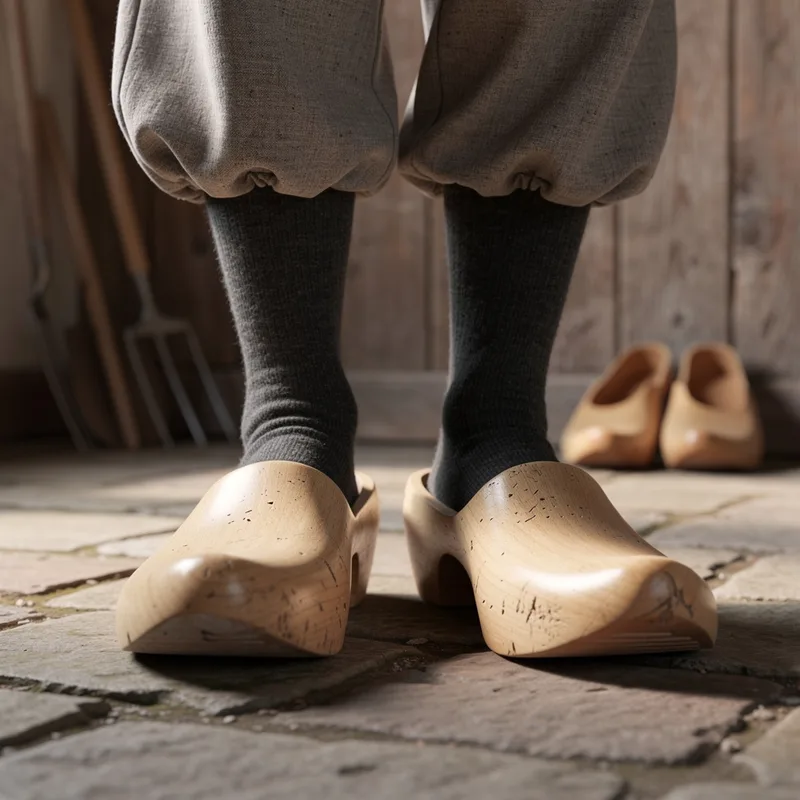
sabot
 3
9.9
3
9.9

- noun
- /ˈsæboʊ/
- Archaic
- My sabots glide easily on the wet stones and moss.
Examples
-
I wear socks over my stockings that my sabots, which wait for me at the door, hold to my feet.
Fiction book (1994) -
"You got to be kidding, right?" He gazed out the French windows at a group of kids in sabots, tacking inexpertly across Alamitos Bay, sails luffing.
Fiction book (2002) -
This was not the affectation of remaining a peasant: everyone in the country in France wears sabots, and they are very comfortable.
Academic text (2007) -
Millet's sabots are presented in profile on the ground with indications of grass and hay.
Academic text (2002) -
Four hundred years ago on the planet Earth, workers who felt their livelihood threatened by automation flung their wooden shoes called sabots into the machines to stop them.
-
In the countryside of France, farmers often wear sabot to protect their feet while working in the fields.
-
My grandfather kept his old wooden sabot displayed by the fireplace as a reminder of his roots in the Netherlands.
-
She stepped into her colorful sabot before heading out to the local market on a sunny afternoon.
Synonyms
 14
4.9
14
4.9
A shoe with a thick wooden sole and sometimes an open heel
 3
5.3
3
5.3
A shoe made from one piece of wood worn in some European countries
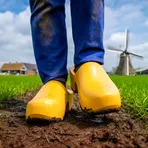
A wooden shoe made from one piece of wood and worn in the Netherlands

A wooden sandal with two raised blocks worn with kimono
Surface Forms
Etymology
Sabot comes from French and originally meant a simple 'wooden shoe', like the English word clog. One popular story says workers threw their sabots into machines, giving us sabotage meaning 'to damage or stop work', but today sabot still simply means the traditional wooden shoe.