
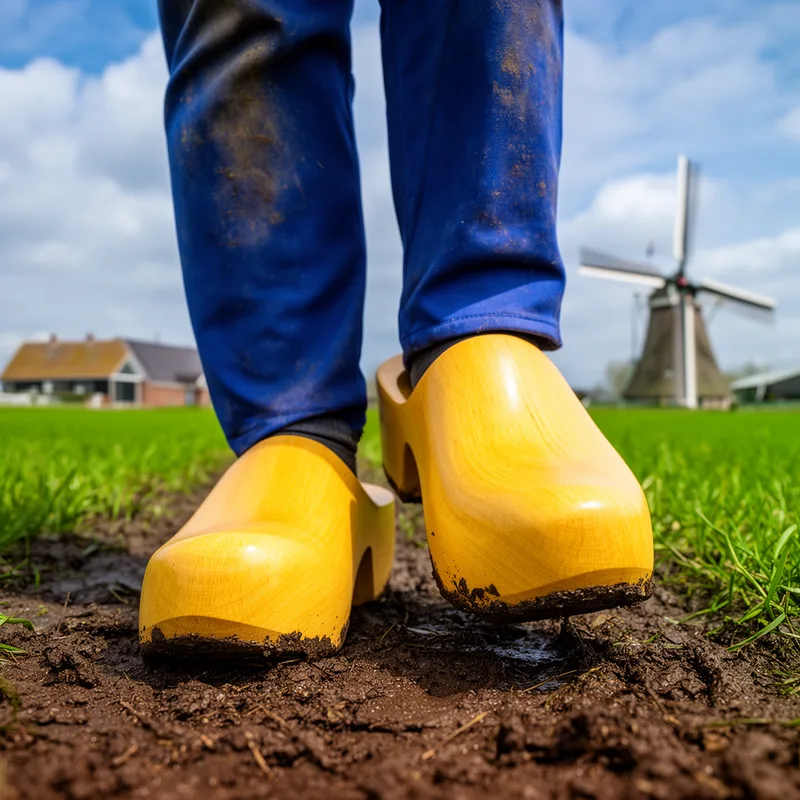
traditional clog
- noun
- The dancers performed in brightly painted traditional clogs during the folk festival.
Examples
-
Farmers in rural Dutch villages still wear traditional clogs when working in muddy fields.
-
On her trip to Amsterdam, she bought a pair of traditional clogs as a souvenir.
-
He wore a pair of traditional clogs to the festival.
-
Many tourists buy traditional clogs as souvenirs.
-
Farmers in rural Dutch villages still wear traditional clogs when working in muddy fields.
-
On her trip to Amsterdam, she bought a pair of traditional clogs as a souvenir.
-
The dancers performed in brightly painted traditional clogs during the folk festival.
Synonyms

 3
5.3
3
5.3

A shoe made from one piece of wood worn in some European countries
How Traditional
 3
5.3
3
5.3
Surface Forms
Morphology
The meaning is directly and transparently built from 'traditional' (customary, passed down) + 'clog' (a wooden-soled shoe), so a learner who knows both words can infer it refers to a customary type of clog. This straightforward adjective+noun composition follows normal compositional patterns and is cross-linguistically common, so it is accessible to a B1 learner even if they don't know the specific cultural detail about the Netherlands.
Etymology
The noun traditional clog comes from village and farm life in the Netherlands: a clog was a 'wooden shoe' made from a single piece of wood that kept farmers' feet dry and safe in mud and water. That's why the term means the old, wooden footwear people wore in that region.