
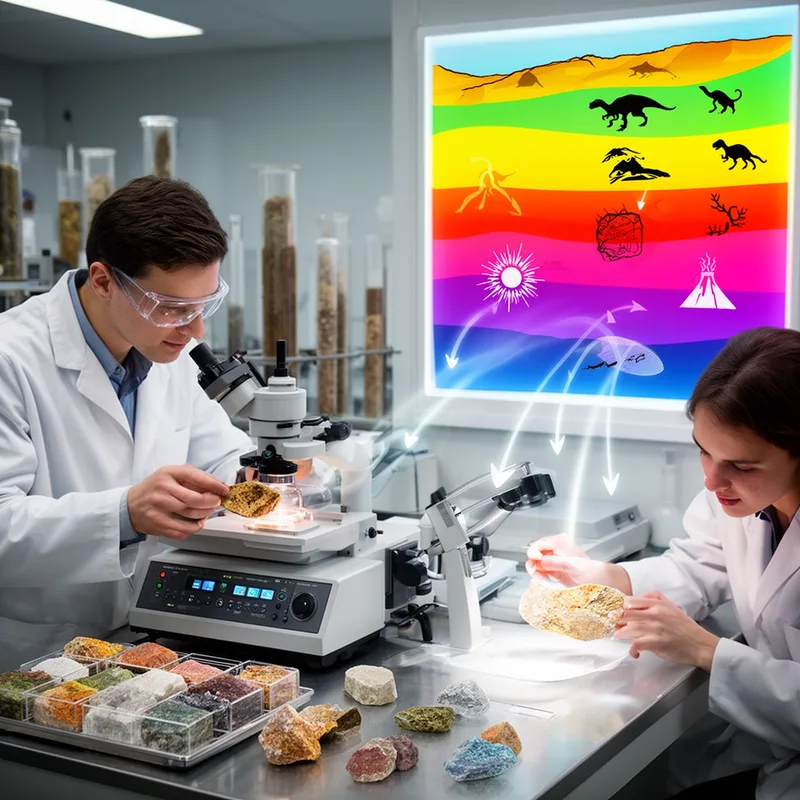
geochronology


 1
8.2
1
8.2
- noun
- /ˌdʒiːoʊkrəˈnɑːlədʒi/
- Specialized
- The study of geochronology is fascinating.
Examples
-
What is geochronology?
-
Modern geochronology combines radiometric dating with stratigraphic analysis for more accurate results.
-
Advances in geochronology have helped scientists better understand the timing of mass extinctions.
-
The research team used geochronology to date the volcanic rocks in the region.
-
The study of geochronology allows scientists to accurately determine the age of rock layers in the Grand Canyon.
-
Researchers in geochronology analyze sediment samples to understand Earth's geological history.
-
The research in geochronology helps geologists date ancient fossils found in sedimentary layers.
Synonyms
 49
7.4
49
7.4
Finding how old rocks, fossils, or objects are by chemical tests

To find how old rocks or fossils are by studying them
Surface Forms
Morphology
geochronology = chronology (semi-transparent) = geo + chron + logy
The word builds on the recognizable base 'chronology' with 'geo-' added, but the resulting scientific term is specialized and not fully predictable for an average learner.
Etymology
The word geochronology comes from geo- ('Earth'), chron- ('time') and -logy ('study'), and you can see geo- in geology and chron- in chronicle. So, geochronology is the study of Earth's 'time', how scientists tell the age and order of events in Earth's history.