
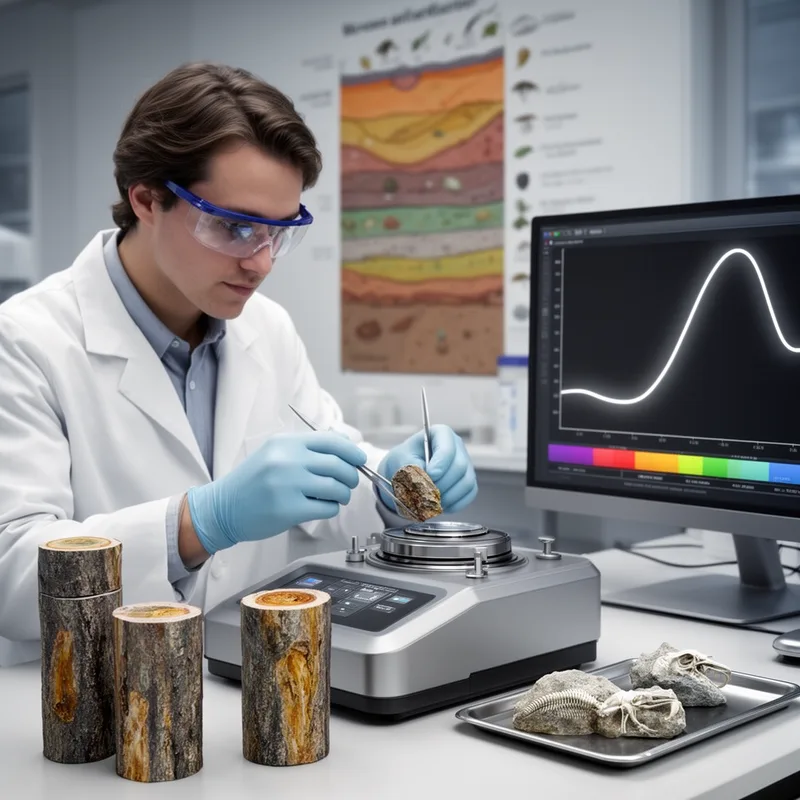
geochronologist
- noun
- /ˌdʒiːoʊˌkrɒnəˈlɒdʒɪst/
- Specialized
 :
geocronólogo
:
geocronólogo
- To understand Earth's history, a geochronologist analyzes minerals from deep within the crust.
Examples
-
A team led by a geochronologist discovered that the fossils were millions of years old.
-
The geochronologist used radiometric dating to estimate the age of the volcanic rocks.
-
A geochronologist can help us understand Earth's history.
-
Many geochronologists work with radiometric dating techniques.
-
The geochronologist analyzed rock samples to determine their age and how they relate to historical geological events.
-
During the conference, the geochronologist presented her findings on the timing of volcanic eruptions in the region.
-
As a leading geochronologist, he uses advanced techniques to date ancient fossils and help understand Earth's history.
Synonyms

A person who finds the age of objects like fossils
A person who finds the dates of events and puts them in order

A person who studies and records when events happen
Surface Forms
Morphology
geochronologist = geochronology (semi-transparent) = geo + chrono + log + ist
The formation is regular with the person suffix -ist added to a specialized scientific base, but the base term itself is unlikely to be familiar to many learners.
Etymology
Geochronologist breaks into three parts: geo- meaning 'earth', chron- meaning 'time', and -logist meaning 'one who studies'. So a geochronologist is literally an 'earth-time' scientist — someone who finds the ages of rocks and the timing of events in Earth's history.

