
chronologer
- noun
- /krəˈnɑlədʒər/
- Many chronologers specialize in ancient history.
Examples
-
Museums often consult a chronologer to verify the age of historical artifacts.
-
The chronologer meticulously documented every event.
-
The chronologer examined ancient manuscripts to determine the exact year of the battle.
-
As a skilled chronologer, she used scientific dating methods to analyze archaeological finds.
-
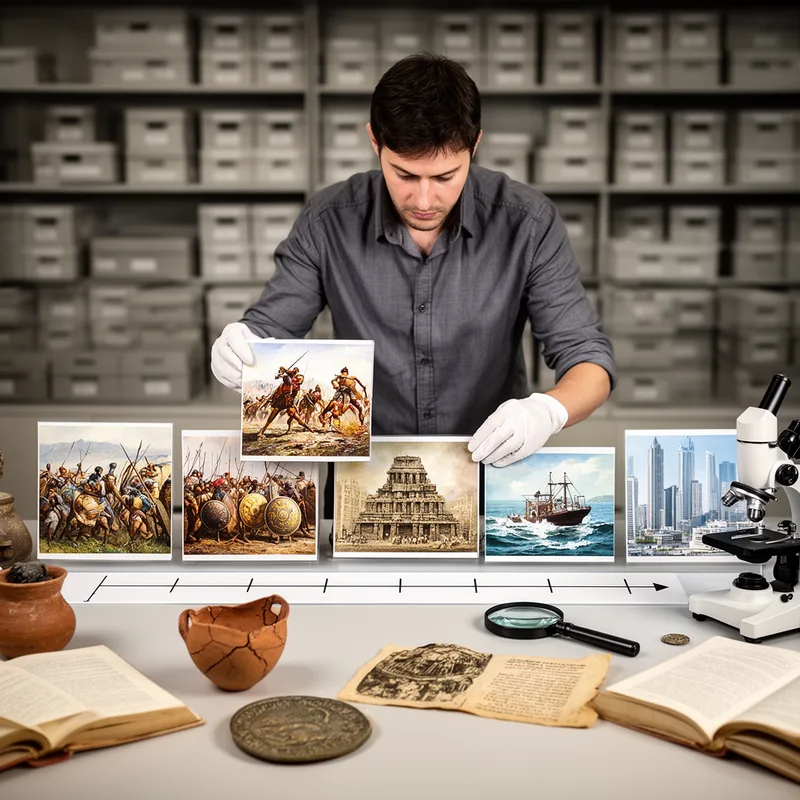
The chronologer carefully arranged the ancient events in the order they occurred.
-
As a skilled chronologer, she documented the significant events of history with precise dates.
-
In his role as a chronologer, he was responsible for establishing timelines for various historical incidents.
Synonyms

 11
7.2
11
7.2

A person who writes down events in the order they happen

A person who studies and records when events happen

A person who finds the age of objects like fossils
Surface Forms
Morphology
chronologer = chronology (semi-transparent) = chrono + log + er
The word is an agent noun built on the learned base 'chronology', but its specialized reference to a person who determines and orders dates is not fully predictable for a B1 learner.
Etymology
Chronologer begins with chron-, a part that means 'time', and ends with -loger, a part that means 'a person who records or studies'. So a chronologer is someone who finds dates and puts events in the order they happened.