
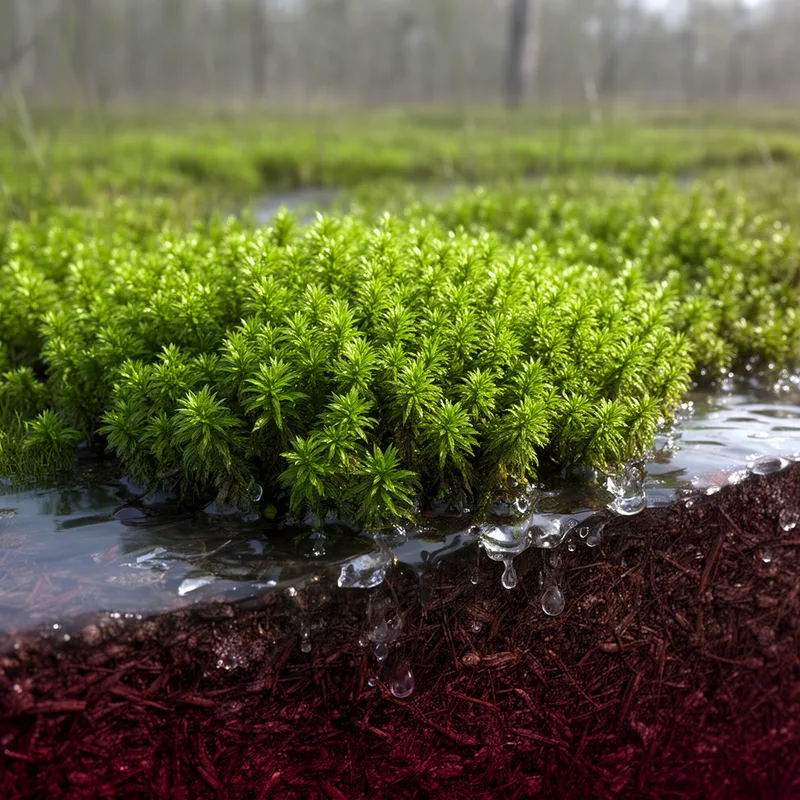
genus Sphagnum
- noun
- /ˈdʒɛnəs ˈsfæɡnəm/
- Specialized
- The genus Sphagnum plays a vital role in the formation of peat bogs across the northern hemisphere.
Examples
-
Because of their high water retention, mosses from the genus Sphagnum are often used in horticulture.
-
The genus Sphagnum is essential for maintaining wetland ecosystems.
-
Scientists have identified dozens of species within the genus Sphagnum.
-
Many species belong to the genus Sphagnum.
-
Mosses from the genus Sphagnum are widely used in gardening due to their ability to retain moisture.
-
Researchers study the genus Sphagnum to understand its contribution to carbon storage in wetland habitats.
-
The unique properties of the genus Sphagnum make it crucial for preserving biodiversity in bog ecosystems.
Synonyms
A group of peat moss plants that grow in wetlands
Surface Forms
Morphology
The phrase simply combines 'genus' (a biological rank grouping related species) with 'Sphagnum' (a kind of moss), so its meaning — the taxonomic group containing Sphagnum species — is directly and compositionally derivable from its parts. This is a standard, cross-linguistic scientific noun phrase pattern, so a learner who knows both constituent words would understand the expression.
Etymology
Genus Sphagnum comes from an old Greek word for moss that meant 'sponge'. The mosses of Sphagnum soak up and hold water like a sponge, so that's why they form wet 'peat bogs' and keep the ground very damp.

