
genus Sanguinaria
- noun
- /ˈdʒɛnəs sæŋɡwɪˈnɛəriə/
- Specialized
- Botanists have classified bloodroot as the only member of the genus Sanguinaria.
Examples
-
The genus Sanguinaria is native to eastern North America and blooms in early spring.
-
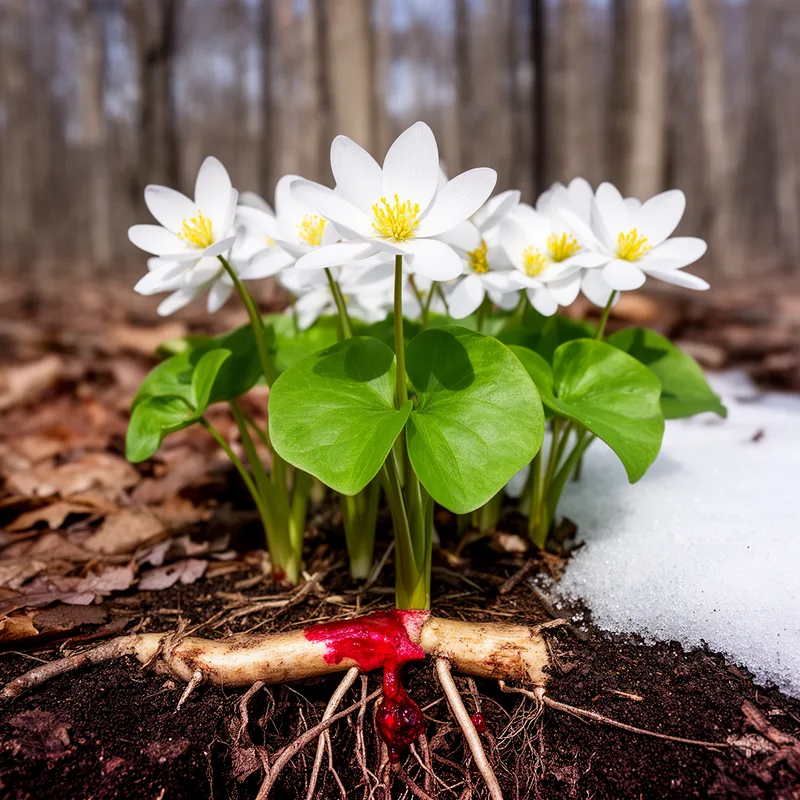
The genus Sanguinaria is known for its distinctive red sap, especially in the species bloodroot.
-
The genus Sanguinaria includes the well-known bloodroot plant.
-
Many botanists study genus Sanguinaria for its medicinal properties.
-
Botanists have classified bloodroot as the only member of the genus Sanguinaria.
-
The genus Sanguinaria is known for its distinctive red sap, especially in the species bloodroot.
-
The genus Sanguinaria is native to eastern North America and blooms in early spring.
Synonyms

A plant called bloodroot with white flowers and red sap used in traditional medicine
Surface Forms
Morphology
The phrase directly combines the taxonomic headword 'genus' with the taxon name 'Sanguinaria', so a learner who knows 'genus' can infer it denotes the genus called Sanguinaria (a group of related species, here bloodroot). Although the proper name may be specialist vocabulary, the construction follows a transparent, cross-linguistic scientific naming pattern and is fully compositional.
Etymology
Genus Sanguinaria comes from Latin because Sanguinaria is built on a word for 'blood'. The plant's roots give a bright red sap, so the name points to this group of plants with 'blood'-like root sap.

