
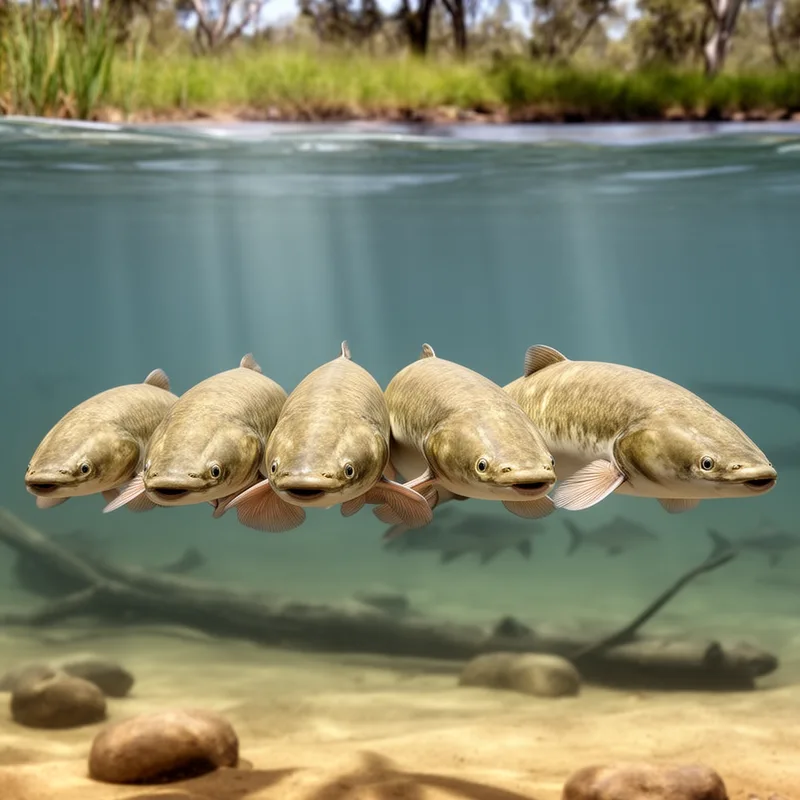
genus Neoceratodus
- noun
- /ˈdʒɛnəs ˌniːoʊˈsɛrətədəs/
- Specialized
- The genus Neoceratodus includes the Australian lungfish, an ancient species dating back millions of years.
Examples
-
In Australia, the genus Neoceratodus is noted for its distinctive appearance and ability to breathe air.
-
The genus Neoceratodus is unique among lungfishes for retaining many primitive features.
-
Researchers studied the genus Neoceratodus to understand the evolution of lungfishes.
-
The genus Neoceratodus is known for its unique adaptations.
-
Many researchers study the genus Neoceratodus for its evolutionary significance.
-
The genus Neoceratodus, which includes the Australian lungfish, has survived for over 400 million years.
-
Biologists classify the genus Neoceratodus as an important group for studying freshwater vertebrate evolution.
Synonyms

A group of freshwater Australian fish that breathe air as well as water
Surface Forms
Morphology
This is a compositional taxonomic noun phrase: combining 'genus' (a biological rank) with the proper name 'Neoceratodus' yields the genus called Neoceratodus. The meaning is literal and follows standard cross-linguistic scientific naming conventions, so a learner who knows both constituents can readily understand it.
Etymology
Genus Neoceratodus may come from Greek words neo 'new', cerat 'horn' and odus 'tooth'. Because these lungfish have strong, plate-like teeth that can look a bit like horns, scientists used this 'new horn-tooth' name for the group, so genus Neoceratodus now refers to the group of Australian lungfish.

