
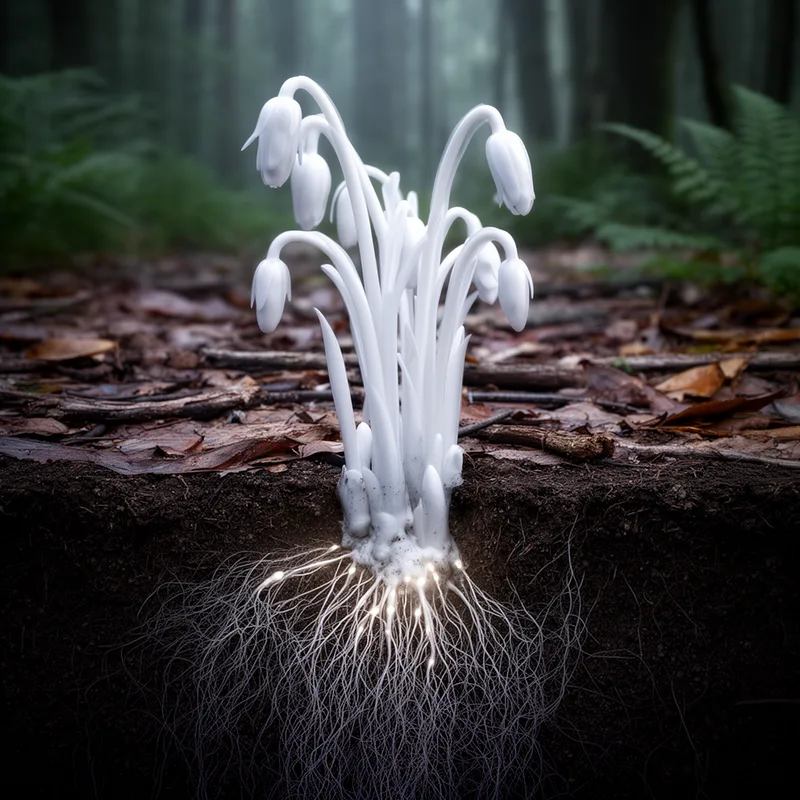
genus Monotropa
- noun
- /ˈdʒɛnəs mɒˈnɒtrəpə/
- Specialized
- The genus Monotropa includes unusual plants that lack chlorophyll and are often found in forest undergrowth.
Examples
-
One notable member of the genus Monotropa is the Indian pipe, known for its ghostly white appearance.
-
Botanists study the genus Monotropa for its unique way of obtaining nutrients from decaying matter.
-
The genus Monotropa includes unique plants that thrive in dark environments.
-
Did you know that genus Monotropa is also known as the Indian pipe?
-
Botanists study the genus Monotropa for its unique way of obtaining nutrients from decaying matter.
-
One notable member of the genus Monotropa is the Indian pipe, known for its ghostly white appearance.
-
The genus Monotropa includes unusual plants that lack chlorophyll and are often found in forest undergrowth.
Synonyms
A leafless plant that does not make its own food and gets nutrients from fungi
A group of non-green flowering plants like Monotropa that grow in shaded woods
Surface Forms
Morphology
The phrase is strictly compositional: 'genus' names a taxonomic rank and 'Monotropa' is the name of that plant group. A learner who knows both constituents can infer it means the taxonomic group containing Monotropa species, since 'genus + name' is a standard, cross-linguistically transparent construction.
Etymology
Genus Monotropa may come from Greek parts mono- meaning 'one' and -tropa meaning 'turn' or 'change', and the name likely points to the plant's single, stemlike flower that stands alone without leaves, like the ghostly Indian pipe. So the name helps you remember these pale, leafless plants that appear as a single, pipe-like stalk.

