
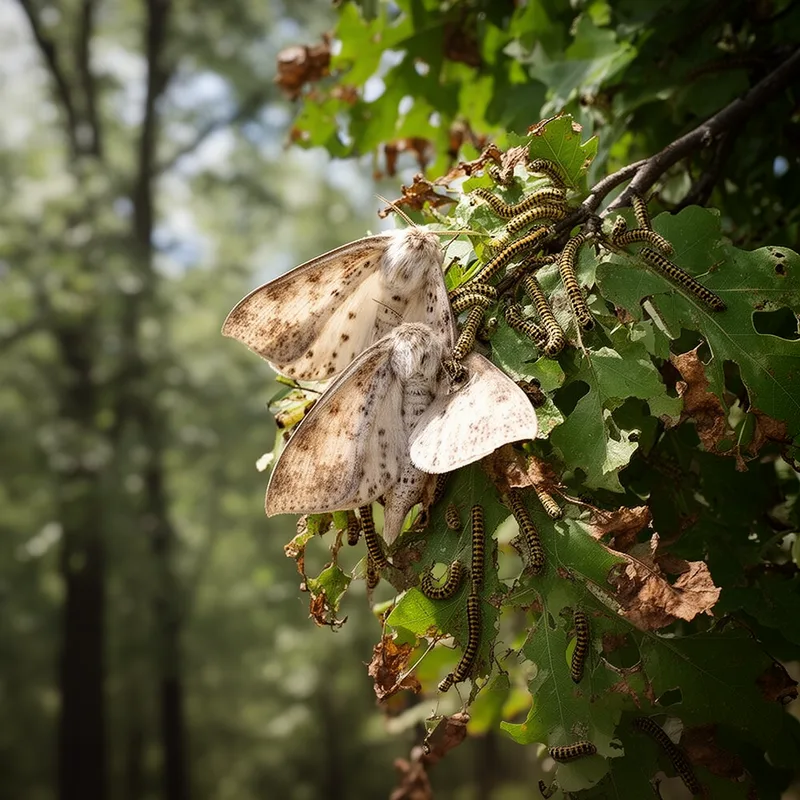
genus Lymantria
- noun
- /ˈdʒɛnəs lɪˈmæntriə/
- Specialized
- The gypsy moth, a member of the genus Lymantria, has become an invasive pest in many countries.
Examples
-
The genus Lymantria includes several species known for defoliating forests worldwide.
-
Entomologists monitor populations of genus Lymantria to prevent outbreaks that might damage local ecosystems.
-
The genus Lymantria includes several pest species.
-
Many trees are affected by the genus Lymantria moths.
-
Entomologists monitor populations of genus Lymantria to prevent outbreaks that might damage local ecosystems.
-
The genus Lymantria includes several species known for defoliating forests worldwide.
-
The gypsy moth, a member of the genus Lymantria, has become an invasive pest in many countries.
Synonyms
A group of moths like the gypsy moth that eat the leaves of trees
Surface Forms
Morphology
This is a straightforward taxonomic composition: 'genus' (a biological rank) combined with the proper name 'Lymantria' denotes the group of related species called Lymantria. The meaning follows a regular, cross-linguistic naming convention in biology rather than an idiomatic shift, so a learner who knows both constituents will understand it.
Etymology
Genus Lymantria is a scientific name for a group of moths. The word Lymantria may come from a Greek word meaning 'destroyer' because many of these moths eat and ruin tree leaves, so the name fits their role as pests.

