
genus Lagenaria
- noun
- /ˈdʒɛnəs ləˈdʒɛnəriə/
- Specialized
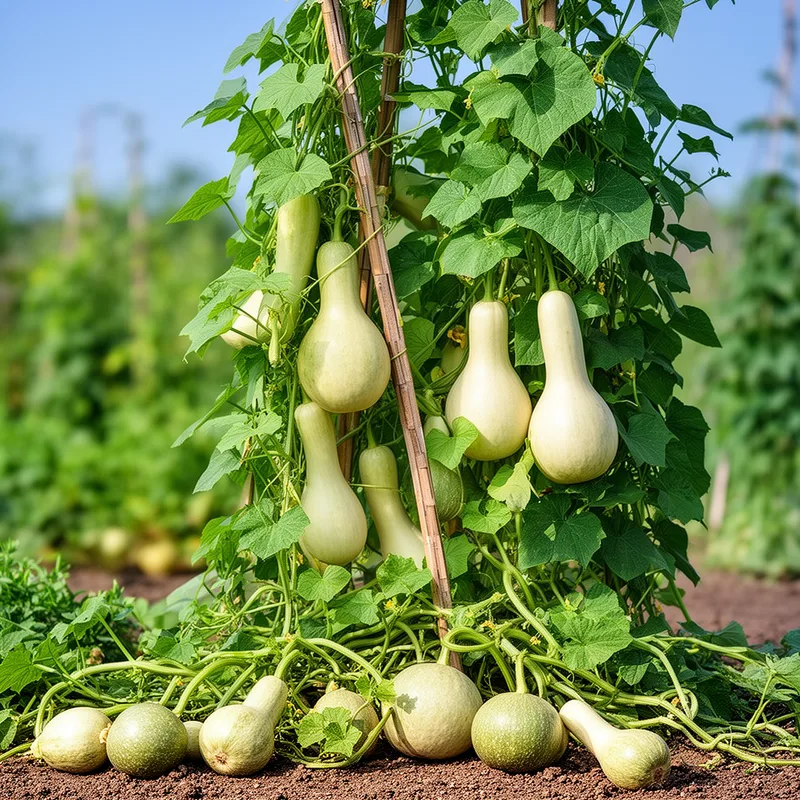
- The genus Lagenaria contains several species, most notably those producing bottle gourds.
Examples
-
Members of the genus Lagenaria are commonly cultivated for their distinctive hard-shelled fruits.
-
Botanists often study the genus Lagenaria due to its agricultural and cultural importance.
-
The genus Lagenaria includes various species of gourds.
-
Did you know that genus Lagenaria is commonly known for the bottle gourd?
-
Researchers classify the genus Lagenaria as part of the gourd family, rich in biodiversity.
-
The farmers in the region prefer cultivating plants from the genus Lagenaria for their unique uses.
-
Understanding the genus Lagenaria aids in the development of sustainable farming practices.
Synonyms

A climbing plant that grows bottle gourds used as food and for making containers
Surface Forms
Morphology
The phrase is fully compositional: 'genus' (a biological rank grouping species) combined with the taxon name 'Lagenaria' yields 'the genus called Lagenaria' meaning the group of vines/gourds. Taxonomic constructions like 'genus X' are cross-linguistically regular, so a B1 learner who knows both constituents can derive the overall meaning.
Etymology
Genus Lagenaria comes from the old Latin word lagena meaning 'bottle'. The plants make hard, bottle-shaped fruits that people used as containers, so the name points to the group's bottle-like gourds.

