
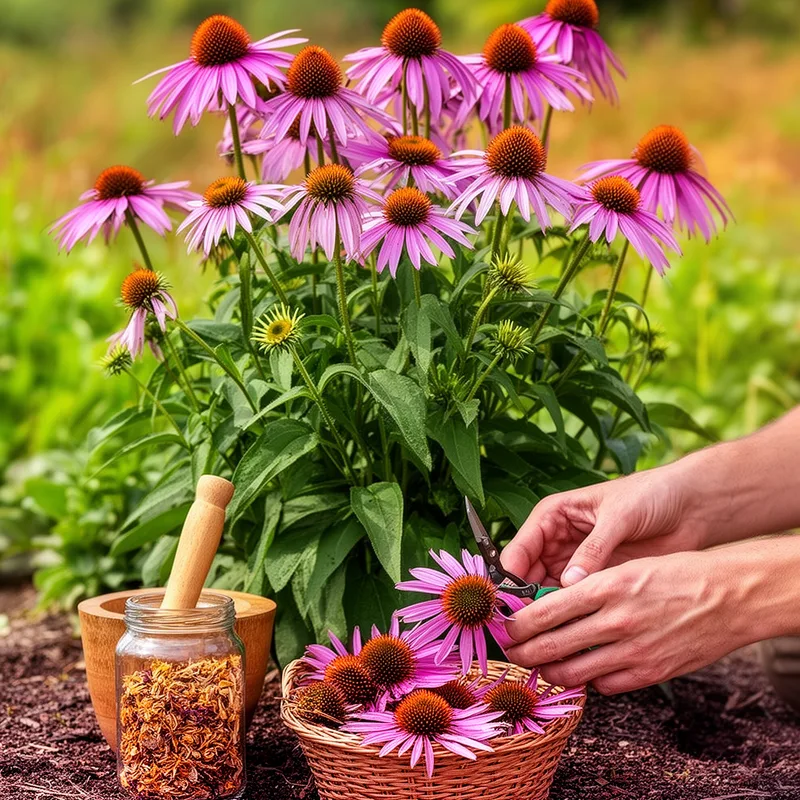
genus Echinacea
- noun
- /ˈdʒɛnəs ˌɛkɪˈneɪʃə/
- Specialized
- The genus Echinacea includes several species used in herbal medicine.
Examples
-
Many gardeners plant members of the genus Echinacea for their attractive flowers and hardiness.
-
Scientists are studying the medicinal properties of genus Echinacea to understand its effects on the immune system.
-
The genus Echinacea is well known for its use in herbal remedies.
-
Many gardeners love the genus Echinacea for its vibrant flowers.
-
Many gardeners plant members of the genus Echinacea for their attractive flowers and hardiness.
-
The genus Echinacea is well known for its use in herbal remedies.
-
Scientists are studying the medicinal properties of genus Echinacea to understand its effects on the immune system.
Synonyms

 7
8.2
7
8.2

A tall garden herb with purple cone-shaped flowers often used to help the immune system
Surface Forms
Morphology
This phrase is fully compositional: 'genus' names a biological rank and 'Echinacea' names a taxon, so 'genus Echinacea' clearly means the taxonomic group containing Echinacea species. The structure and meaning follow standard scientific naming conventions found across languages, so a B1 learner who knows both constituents will readily infer the intended sense.
Etymology
Genus Echinacea gets its name from the Greek word echinos, meaning 'hedgehog' or 'sea urchin', because the flower's round central cone is covered in sharp points. That's why this group of daisy-like plants is called Echinacea and the name helps you remember their spiky center.