
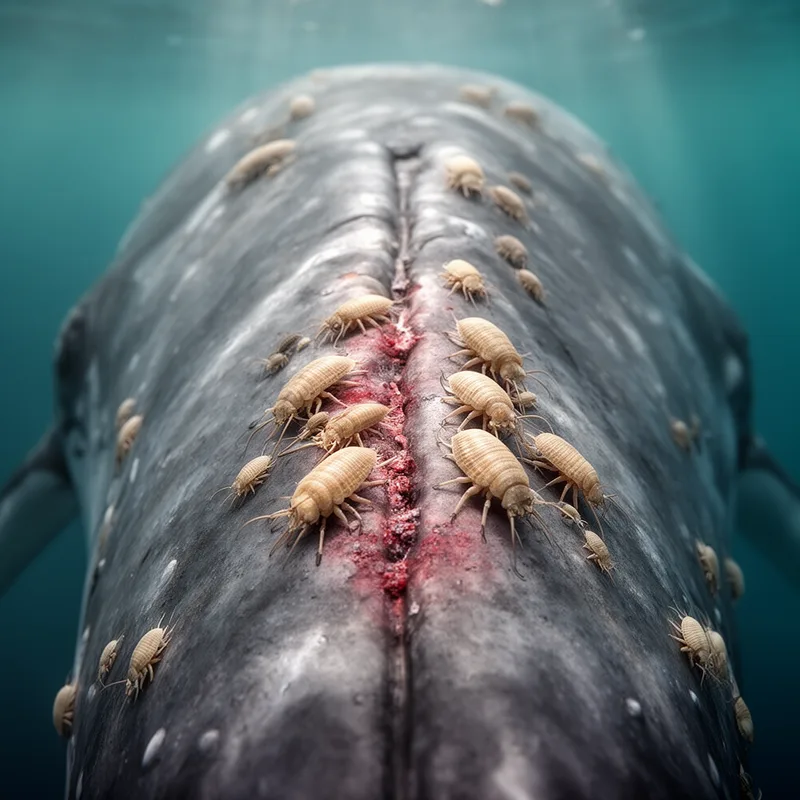
genus Cyamus
- noun
- Specialized
- The genus Cyamus is adapted to cling tightly to the skin of its host.
Examples
-
The genus Cyamus consists of small crustaceans known as whale lice that can often be found on the skin of whales.
-
The genus Cyamus includes several species that are found on whales.
-
Infestation by species in the genus Cyamus can reveal much about whale health.
-
Scientists studying whales often examine the genus Cyamus to learn about parasitic relationships.
-
Did you know that the genus Cyamus is commonly referred to as whale lice?
-
Researchers have identified numerous species within the genus Cyamus that specifically parasitize different types of whales.
-
Understanding the genus Cyamus is crucial for studying the health and ecology of whale populations.
Synonyms

A small sea animal like a crab that lives on whales and eats their skin
Surface Forms
Morphology
The phrase is a compositional taxonomic label: 'genus' denotes a biological rank and 'Cyamus' is the name of the group (whale lice), so the overall meaning — the genus named Cyamus comprising certain whale lice species — is directly derivable from the constituents. The 'genus X' construction is a standard, cross-linguistic scientific pattern, making it immediately comprehensible to learners who know both words.
Etymology
Genus Cyamus may come from the old Greek word 'kyamos' meaning 'bean', because the small, round animals look a little like tiny beans stuck to a whale's skin, so Cyamus is used for the 'whale lice' that cling to whales.

