
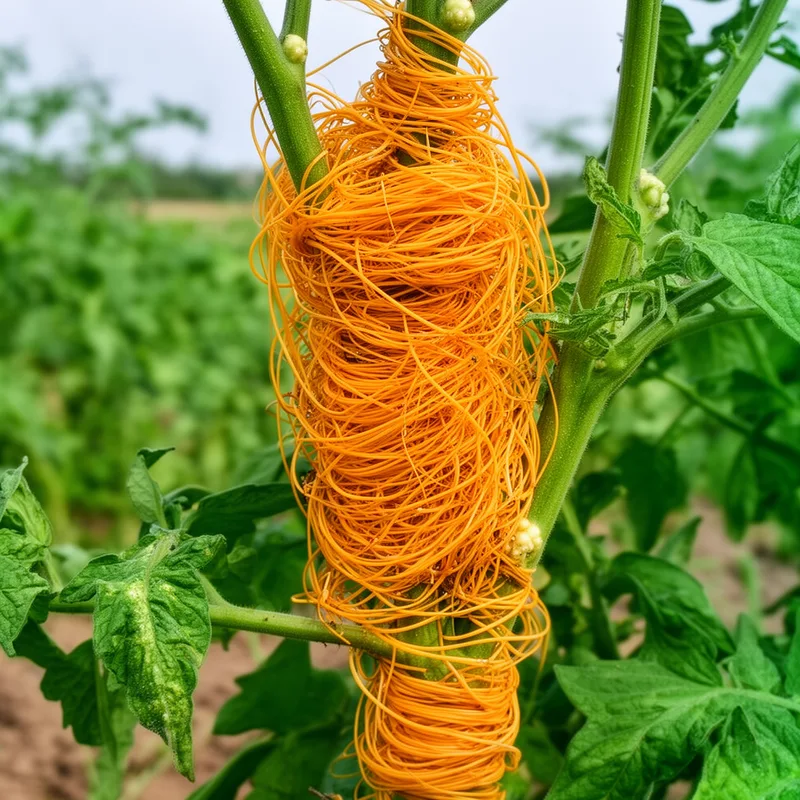
genus Cuscuta
- noun
- Specialized
- The genus Cuscuta is notable for its leafless, thread-like appearance and lack of chlorophyll.
Examples
-
Many species in the genus Cuscuta are agricultural pests due to their parasitic nature.
-
Botanists study the genus Cuscuta to understand the evolution of plant parasitism.
-
The genus Cuscuta is known for its unique parasitic properties.
-
Did you know that the genus Cuscuta lacks chlorophyll?
-
Many species in the genus Cuscuta are agricultural pests due to their parasitic nature.
-
Botanists study the genus Cuscuta to understand the evolution of plant parasitism.
-
The genus Cuscuta is notable for its leafless, thread-like appearance and lack of chlorophyll.
Synonyms

Thin plants without leaves that wrap around other plants and take food from them
A thin yellow or white plant that twines around other plants and takes their food
Surface Forms
Morphology
This is a straightforward taxonomic composition: 'genus' (a biological rank) combined with the name 'Cuscuta' yields 'the genus called Cuscuta' (the group of species named Cuscuta). Although technical, the meaning is fully derivable from the constituents and follows a common cross-linguistic pattern for naming taxa, so a B1 learner who knows both words would understand it.
Etymology
Genus Cuscuta is the scientific name for a group of thin, leafless plants called 'dodder' that twist like string and wrap around other plants. Because they have no green leaves and take food from their hosts, the name now refers to this 'parasitic' group.

