
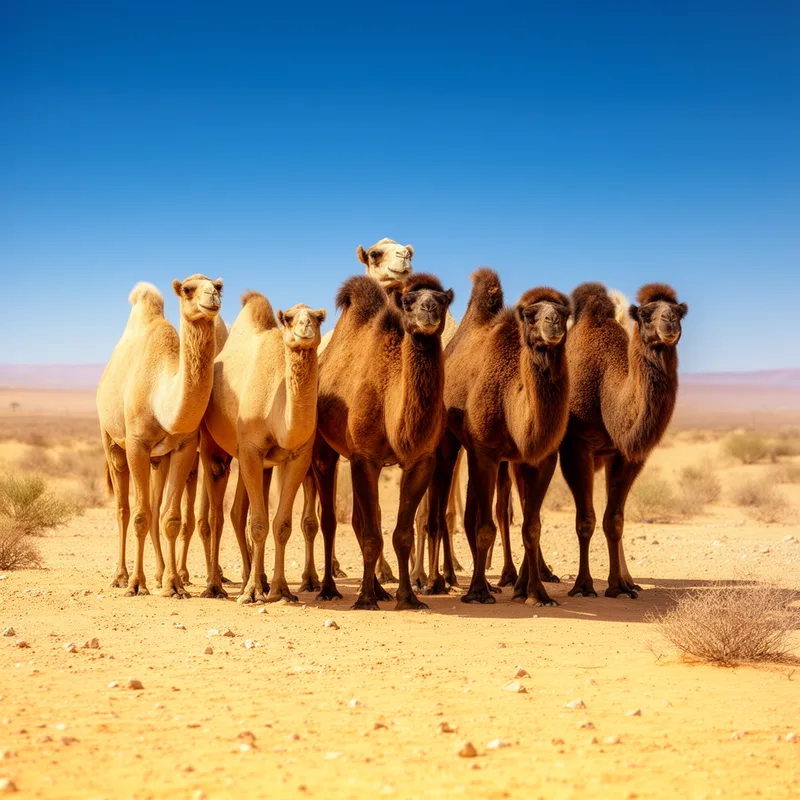
genus Camelus
- noun
- /ˈdʒiːnəs ˈkeɪmələs/
- Specialized
- The genus Camelus includes both the dromedary and the Bactrian camel.
Examples
-
Members of the genus Camelus are adapted to live in arid and semi-arid environments.
-
Did you know that the genus Camelus has adapted to desert environments?
-
Scientists discovered new insights into the evolution of the genus Camelus.
-
The genus Camelus includes both the dromedary and the Bactrian camel.
-
The genus Camelus includes both the dromedary and the Bactrian camel.
-
Members of the genus Camelus are adapted to live in arid and semi-arid environments.
-
Did you know that the genus Camelus has adapted to desert environments?
Synonyms

A group of large long-necked animals that includes camels from Asia and Africa
Surface Forms
Morphology
The phrase is compositionally transparent: 'genus' denotes a biological rank and 'Camelus' is the taxonomic name for the camel group, so together they clearly mean the taxonomic genus of camels. This Latin binomial/taxonomic naming pattern is standard and cross-linguistically common, so a B1 learner who knows both constituents can infer the MWE's meaning.
Etymology
Genus Camelus comes from scientific Latin: genus means a 'group' and Camelus is the Latin word for a 'camel'. So genus Camelus simply means the 'group of camels' that scientists use to name these animals.

