
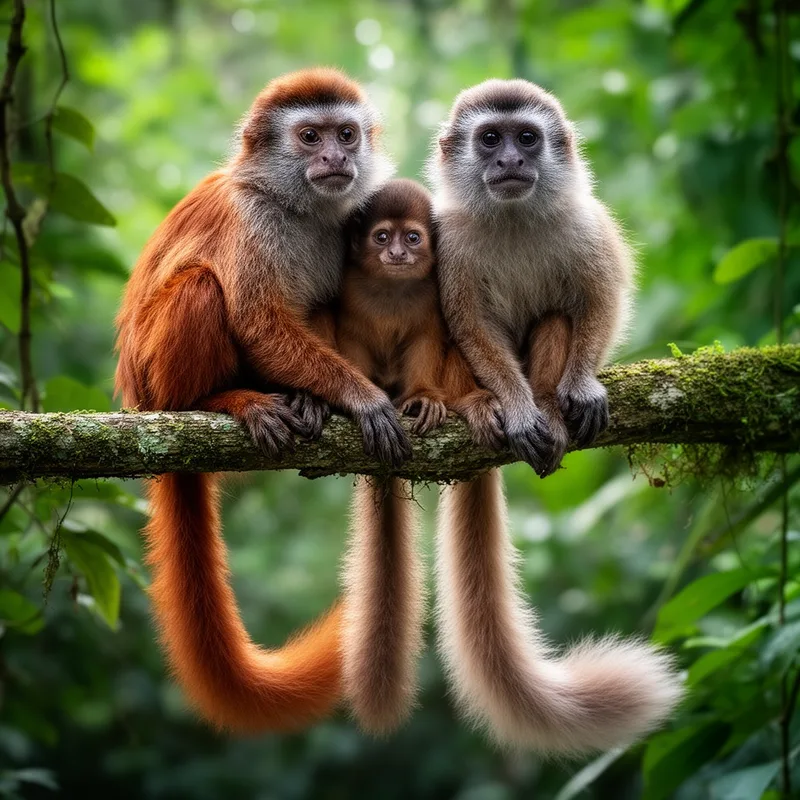
genus Callicebus
- noun
- /ˈdʒiːnəs ˈkælɪˌsiːbəs/
- Specialized
- The new species of the genus Callicebus monkey was found in an area of pristine Amazon rainforest.
Examples
-
The genus Callicebus includes several species that are known for their social behavior and vocalizations.
-
Researchers discovered a new species within the genus Callicebus in the remote jungles of Brazil.
-
Studying the genus Callicebus helps scientists understand the evolution of primates in South America.
Synonyms

A small South American monkey with thick fur and a long bushy tail that often lives in pairs
Surface Forms
Morphology
This is a straightforward taxonomic noun phrase: 'genus' (a biological rank grouping related species) combined with the taxon name 'Callicebus' yields 'the genus called Callicebus' meaning a group of titi monkeys. The composition is literal and follows regular naming conventions (cross-linguistically common), so a B1 learner who knows both constituents will readily infer the meaning.
Etymology
Genus Callicebus may come from Greek parts calli- meaning 'beautiful' and -cebus meaning 'monkey', so it creates the picture of a 'beautiful monkey'. That's why this name fits the small, soft-furred titi monkeys found in South America.

