
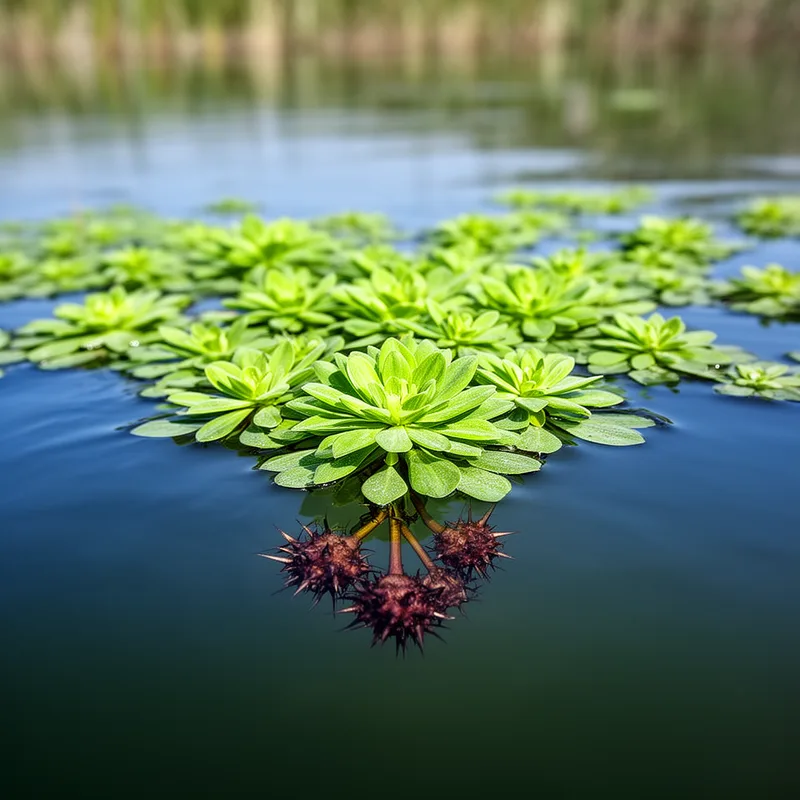
genus Trapa
- noun
- /ˈdʒiːnəs ˈtrɑːpə/
- Specialized
- The genus Trapa includes several species of water chestnuts.
Examples
-
The genus Trapa is commonly found in slow-moving rivers and lakes throughout Eurasia.
-
Botanists have identified the genus Trapa as the source of the edible water chestnut.
-
Research on invasive species has focused on several members of the genus Trapa.
-
Many researchers study the genus Trapa for its ecological benefits.
-
The genus Trapa consists of aquatic plants that thrive in freshwater lakes.
-
In Eurasia, the genus Trapa is recognized for its uniquely shaped leaves and edible nuts.
-
Scientists have discovered that the genus Trapa plays a vital role in maintaining aquatic ecosystems.
Synonyms

 1
9.9
1
9.9

A small water plant with floating leaves and edible seeds used as food
Surface Forms
Morphology
The phrase is a straightforward taxonomic noun phrase combining the common noun 'genus' (a biological rank) with the proper name 'Trapa' (the name of that genus). A B1 learner who knows both constituents can directly infer it refers to the genus called Trapa (the group of related aquatic herbs), a compositional and cross-linguistically regular pattern for scientific names.
Etymology
Genus Trapa may come from an old word for the water chestnut plant. The word genus means 'group' and Trapa refers to the edible 'water chestnut', so the name means the group of water plants that include that nut.