
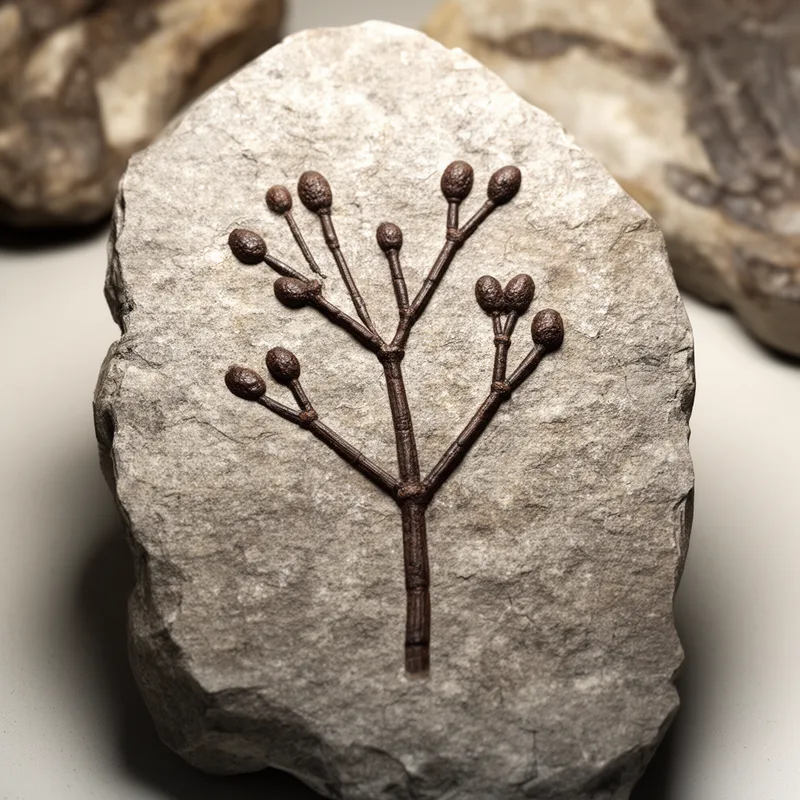
genus Rhynia
- noun
- Specialized
- Paleobotanists often cite genus Rhynia as one of the earliest examples of vascular plants.
Examples
-
The discovery of genus Rhynia fossils provided crucial insights into the evolution of early land plants.
-
Specimens belonging to genus Rhynia have been found in the Rhynie Chert of Scotland.
-
The genus Rhynia is crucial for understanding early plant evolution.
-
Fossils from the genus Rhynia provide insights into Devonian ecosystems.
-
Paleobotanists often cite genus Rhynia as one of the earliest examples of vascular plants.
-
Specimens belonging to genus Rhynia have been found in the Rhynie Chert of Scotland.
-
The discovery of genus Rhynia fossils provided crucial insights into the evolution of early land plants.
Synonyms



 1
9.9
A small leafless extinct plant found as fossils with splitting stems and spore cases
Surface Forms
Morphology
The phrase combines the taxonomic noun 'genus' with the proper name 'Rhynia' to denote the biological group called Rhynia, so its meaning is directly compositional from the constituents. This is a standard scientific naming pattern found across languages, making the MWE immediately understandable to a learner who knows both words.
Etymology
Genus Rhynia is a scientific name taken from the fossil site called Rhynie; genus means 'group' and Rhynia names the place. The fossils are small, leafless, branching stems with tiny spore bags at their tips, so the name points to a 'group' of very early land plants found at Rhynie.