
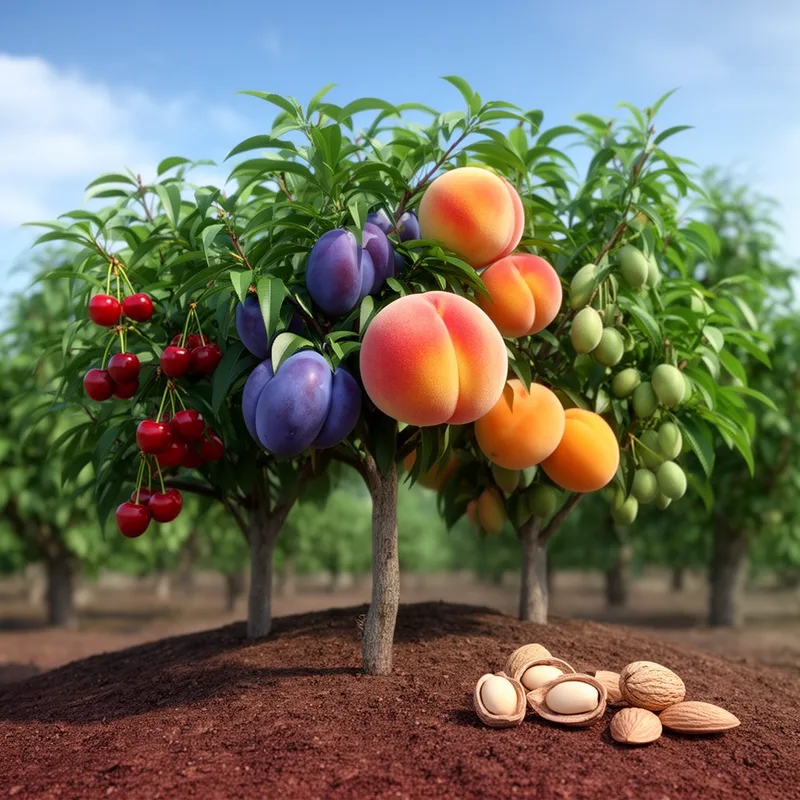
genus Prunus
- noun
- /ˈdʒɛnəs ˈpruːnəs/
- Specialized
- The genus Prunus includes many well-known fruit trees such as cherries and plums.
Examples
-
Almonds are actually part of the genus Prunus along with peaches and apricots.
-
Botanists study the genus Prunus to understand the diversity of stone fruits.
-
The genus Prunus includes many fruit-bearing plants.
-
Many species in the genus Prunus are cultivated for their fruits.
-
Almonds are actually part of the genus Prunus along with peaches and apricots.
-
The genus Prunus includes many well-known fruit trees such as cherries and plums.
-
Many species in the genus Prunus are cultivated for their fruits.
Synonyms
A group of small trees and bushes that includes plums, cherries, peaches, apricots and almonds
Surface Forms
Morphology
The phrase is a straightforward taxonomic combination: 'genus' (a biological rank) applied to the name 'Prunus' yields 'the group of related species called Prunus.' This is compositional and follows a common cross-linguistic pattern (genus + taxon name), so a learner who knows both constituents can infer the MWE meaning, although it is technical vocabulary.
Etymology
Genus Prunus comes from Latin because Prunus was an old word for a 'plum' tree. Plant scientists used genus to mean a 'group' of related plants and added Prunus because this group includes plums, cherries, peaches and almonds, so the name shows what kinds of plants are in it.

