
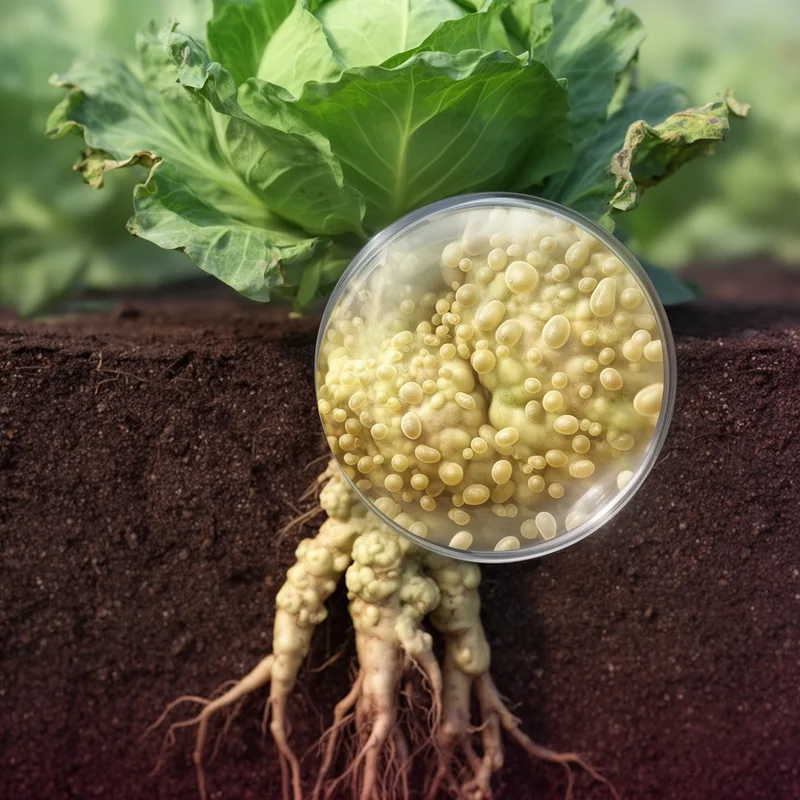
genus Plasmodiophora
- noun
- /ˈdʒɛnəs plæzˈmoʊdiəˌfɔrə/
- Specialized
- The genus Plasmodiophora includes organisms responsible for the clubroot disease in cabbages.
Examples
-
The genus Plasmodiophora includes several species that affect plant roots.
-
Specimens from the genus Plasmodiophora are often found in agricultural soils impacting root crops.
-
Researchers studied the life cycle of organisms within the genus Plasmodiophora to better understand plant infections.
-
Researchers study the genus Plasmodiophora to understand its impact on agriculture.
-
Researchers studied the life cycle of organisms within the genus Plasmodiophora to better understand plant infections.
-
The genus Plasmodiophora includes organisms responsible for the clubroot disease in cabbages.
-
Specimens from the genus Plasmodiophora are often found in agricultural soils impacting root crops.
Synonyms

A tiny living thing that infects plants and causes clubroot disease in cabbages
Surface Forms
Morphology
The phrase combines the known taxonomic headword 'genus' (a biological rank grouping related species) with the proper name 'Plasmodiophora', so its meaning — a taxonomic group called Plasmodiophora — is directly derivable from the constituents. Scientific name + rank constructions are compositional and cross-linguistically predictable, so a B1 learner who knows both component meanings will understand the MWE.
Etymology
Genus Plasmodiophora may come from two Greek parts: plasma meaning a 'formed mass' or blob, and phora meaning 'bearer'. So the name paints a picture of tiny organisms that form a slimy blob inside plant roots, which is why it is used for this group of plant parasites.

