
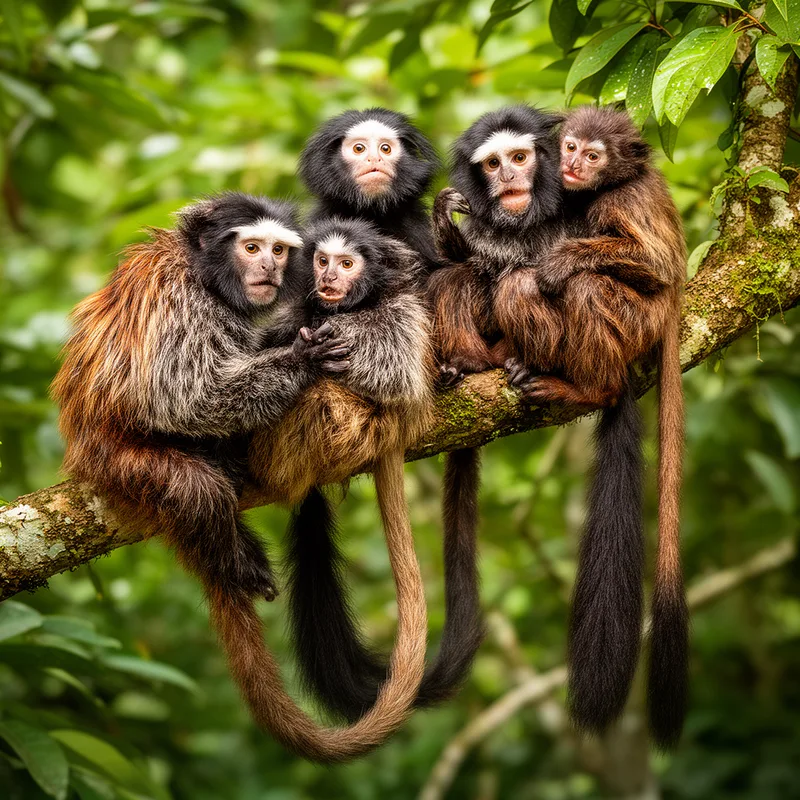
genus Pithecia
- noun
- /ˈdʒɛnəs pɪˈθiːʃə/
- Specialized
- The genus Pithecia includes several species of saki monkeys found in the Amazon basin.
Examples
-
Researchers are studying the social behavior of primates in the genus Pithecia.
-
Distinctive facial markings are a feature of monkeys in the genus Pithecia.
-
The genus Pithecia includes several species of monkeys.
-
Did you know that genus Pithecia is known for its distinctive appearance?
-
The genus Pithecia includes several species of saki monkeys native to South America.
-
Researchers are studying the social behavior of primates in the genus Pithecia.
-
Distinctive facial markings are a feature of monkeys in the genus Pithecia.
Synonyms
A group of South American monkeys called sakis with long bushy tails and shaggy fur
Surface Forms
Morphology
The phrase simply combines the biological rank 'genus' with the taxon name 'Pithecia', so a learner who knows 'genus' (a group of related species) and 'Pithecia' (a type of monkey) can directly infer it refers to the genus that contains those monkeys. This compositional, taxonomic naming pattern is transparent and cross-linguistically familiar, making the meaning predictable to learners who know the constituents.
Etymology
Genus Pithecia comes from the Latin word genus, meaning 'group', and a Greek word Pithecia (from 'pithekos'), meaning 'monkey'. So it literally means a 'group of monkeys', which is why scientists use this name for the saki monkeys.

