

genus Phthirus
- noun
- /ˈdʒɛnəs ˈfθɪrəs/
- Specialized
- Only two species belong to the genus Phthirus, one of which infests humans and is known as the crab louse.
Examples
-
The genus Phthirus includes parasites with short, broad bodies adapted for clinging to coarse hair.
-
Scientists classified the crab louse under the genus Phthirus due to its unique adaptations for parasitism.
-
Research on the genus Phthirus has provided insights into the evolution of host-specific parasites.
-
The genus Phthirus includes several species of lice.
-
Many people are unaware of the genus Phthirus and its effects.
-
The genus Phthirus comprises several species, including the crab louse, which infests human hair.
-
Understanding the genus Phthirus is crucial for developing treatments against lice infestations in humans.
Synonyms
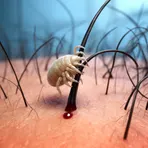
A tiny insect that lives on human pubic hair and sucks blood
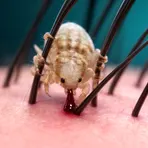
A small insect like the crab louse that lives on human hair and drinks blood

A small insect that lives on human body hair, often in the pubic area, and causes itching
Surface Forms
Morphology
The phrase is compositionally transparent: 'genus' names a taxonomic rank and 'Phthirus' is the taxon name, so a learner who knows both words can infer it denotes the biological group of lice. Although 'Phthirus' is specialized vocabulary, the 'genus + name' pattern is regular and cross-linguistically familiar, making the overall meaning derivable from the parts.
Etymology
Genus Phthirus gets its name from the crab-like look of these tiny lice: their short, wide bodies and strong legs let them cling to coarse hair, so people call them 'crab lice'. So genus Phthirus means 'a group of small lice that live on mammals and hold on to hair as parasites'.

