
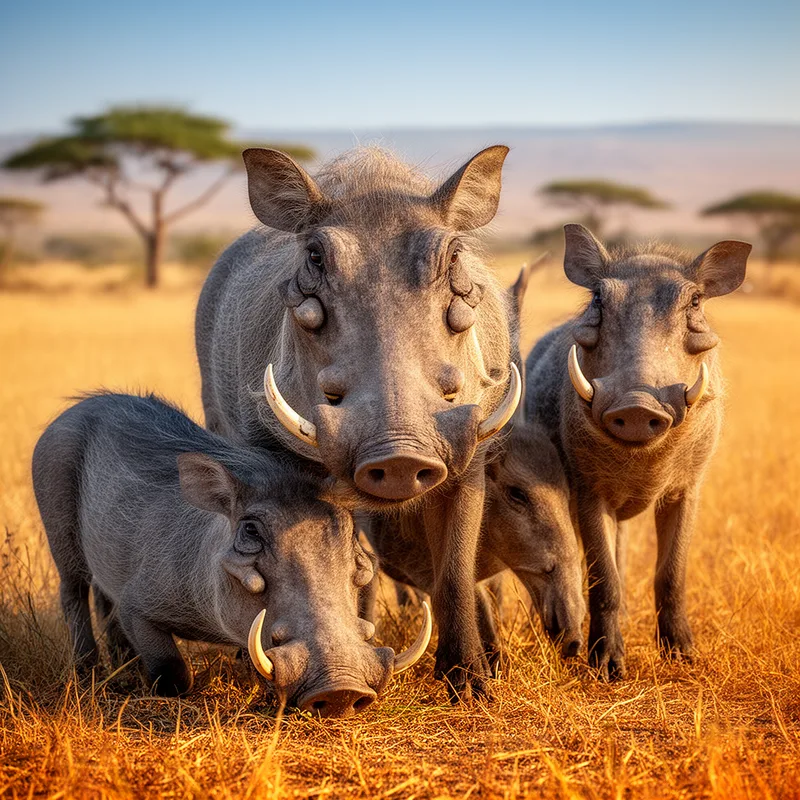
genus Phacochoerus
- noun
- Specialized
- The genus Phacochoerus features wild pigs known for their prominent facial warts and curved tusks.
Examples
-
The genus Phacochoerus consists of two species commonly known as warthogs.
-
Unlike other wild pigs, members of the genus Phacochoerus are adapted to dry savanna environments.
-
Researchers have studied the behavior of animals within the genus Phacochoerus in their natural habitat.
-
The genus Phacochoerus includes the common warthog.
-
Did you know that the genus Phacochoerus is native to Africa?
-
Researchers have studied the behavior of animals within the genus Phacochoerus, which includes species like warthogs native to Africa.
-
In Africa, animals of the genus Phacochoerus are commonly recognized as warthogs due to their unique physical characteristics.
Synonyms
A large African wild pig with big warts on its face and curved tusks
Surface Forms
Morphology
The phrase is a straightforward composition of the taxonomic noun 'genus' and the taxon name 'Phacochoerus'; if a learner knows 'genus' and recognizes the proper name (or its definition), they can infer it denotes the genus called Phacochoerus (warthogs). This follows standard biological naming conventions found across languages, so the meaning is directly derivable from the constituents.
Etymology
Genus Phacochoerus is a scientific name made from old Greek words for 'wart' and 'pig'. The parts phaco, meaning 'wart', and choerus, meaning 'pig', point to the animal's big face bumps, so the name simply means 'warthog'.

