
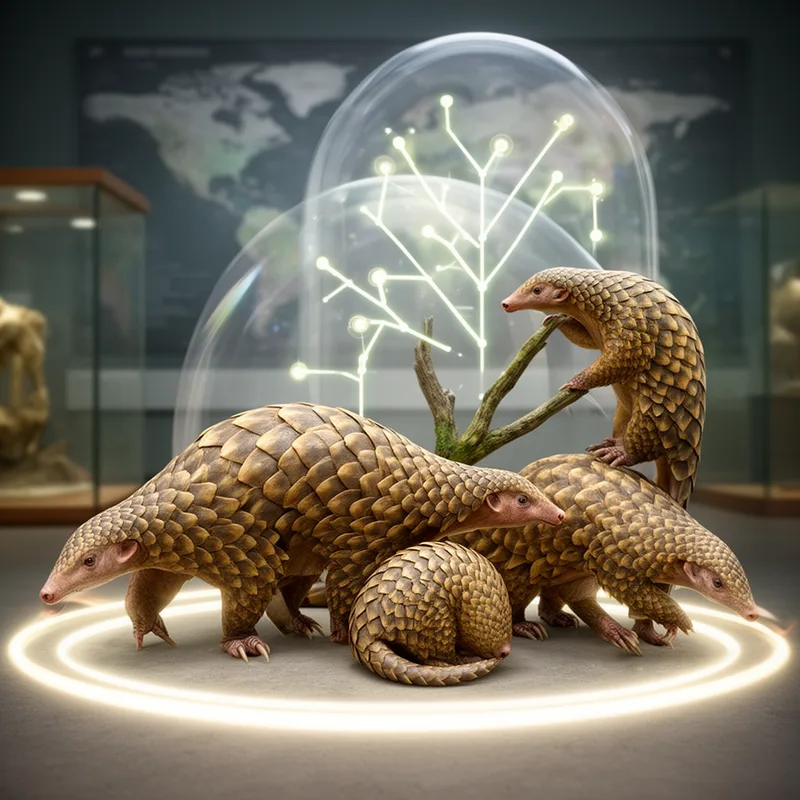
genus Manis
- noun
- /ˈdʒɛnəs ˈmeɪnɪs/
- Specialized
- All pangolins belong to the genus Manis, which is the only genus in the family Manidae.
Examples
-
Scientists discovered a new species within the genus Manis in Southeast Asia.
-
The genus Manis is characterized by its distinctive overlapping scales made of keratin.
-
The genus Manis includes several species of pangolins.
-
Did you know that genus Manis consists of scaly anteaters?
-
All pangolins belong to the genus Manis, which is the only genus in the family Manidae.
-
The genus Manis is characterized by its distinctive overlapping scales made of keratin.
-
The genus Manis includes several species of pangolins.
Synonyms
A group of animals called pangolins that live in Asia and Africa
Surface Forms
Morphology
The phrase combines the noun 'genus' (a taxonomic rank) with the proper name 'Manis' (the genus name), so its meaning — the taxonomic genus called Manis comprising pangolins — is directly derivable from the parts. Although technical, this compositional noun–name pattern is standard in scientific naming and cross-linguistically familiar, making it accessible to a learner who knows both constituents.
Etymology
Genus Manis is the scientific name for the group of scaly mammals called 'pangolins'. Think of genus as a family name and Manis as the chosen family for these animals, so the phrase means 'a group of pangolins'.

