
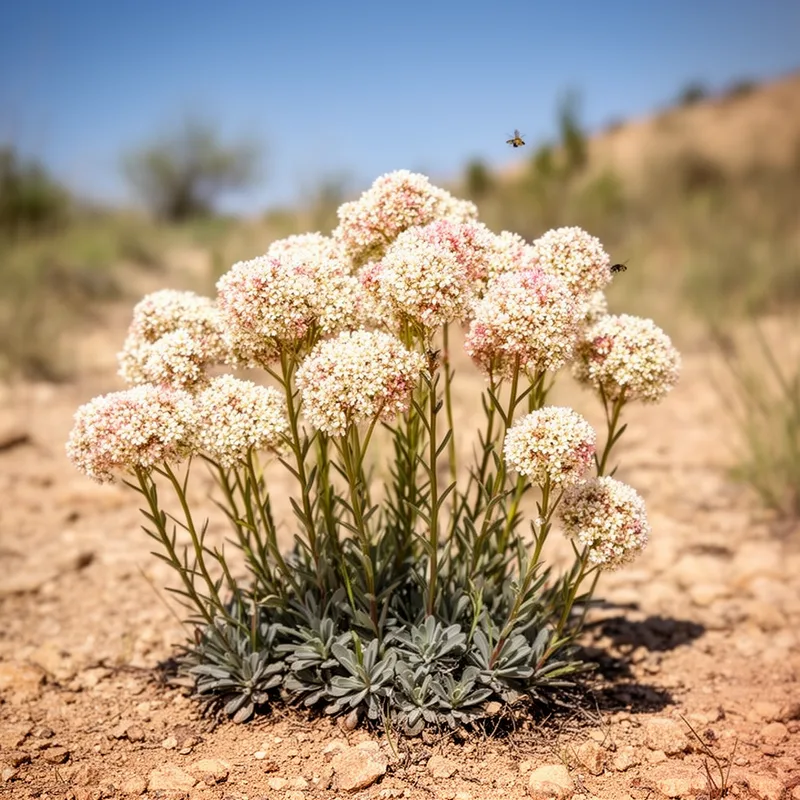
genus Eriogonum
- noun
- /ˈdʒɛnəs ˌɛrɪˈoʊɡənəm/
- Specialized
- Species in the genus Eriogonum are commonly known as wild buckwheats across North America.
Examples
-
The genus Eriogonum thrives in dry, sandy soils and is important for native pollinators.
-
Botanists have identified hundreds of species within the genus Eriogonum.
-
The genus Eriogonum includes many unique wildflowers.
-
Many species in the genus Eriogonum thrive in dry environments.
-
Botanists have identified hundreds of species within the genus Eriogonum.
-
Species in the genus Eriogonum are commonly known as wild buckwheats across North America.
-
The genus Eriogonum thrives in dry, sandy soils and is important for native pollinators.
Synonyms
A plant like wild buckwheat with many small flowers in groups
Surface Forms
Morphology
The phrase combines the noun 'genus' (a biological rank grouping related species) with the taxonomic name 'Eriogonum', so its meaning — the genus called Eriogonum — is directly and compositionally derivable from its parts. Taxonomic constructions of this form are common cross-linguistically and follow predictable naming patterns, making the expression transparent to a learner who knows both constituents.
Etymology
Genus Eriogonum comes from Greek parts erio- and -gonum, which mean 'wool' and 'knee'. The name may refer to the plant's woolly, knobby stems and helps you remember it is a group of North American 'wild buckwheats'.

