
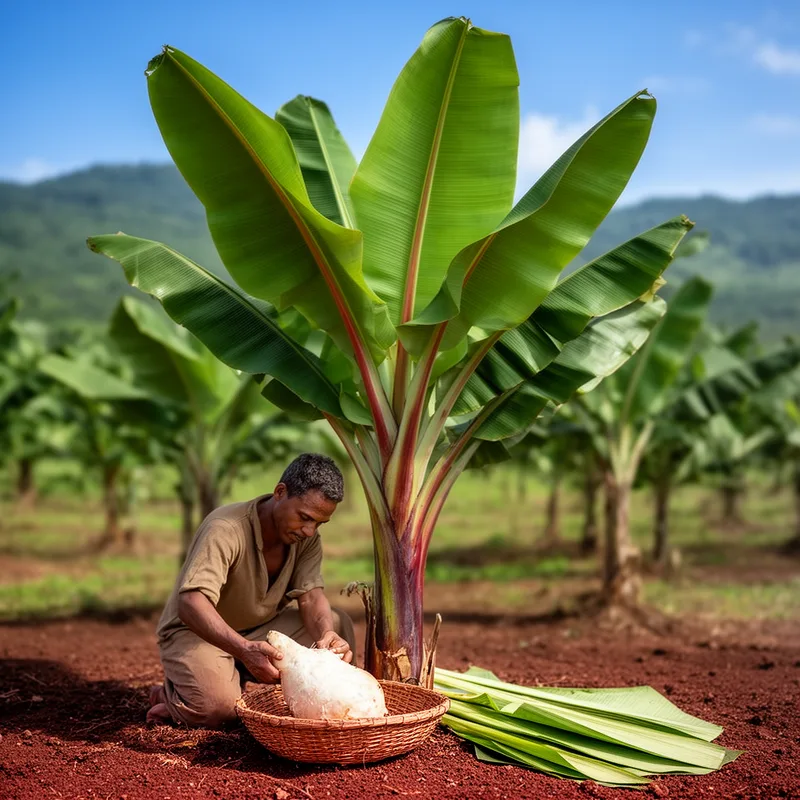
genus Ensete
- noun
- /ˈdʒɛnəs ɛnˈsiːti/
- Specialized
- The genus Ensete includes plants that are native to Africa and are often grown for their starchy corms.
Examples
-
Many gardeners choose to cultivate species from the genus Ensete for their ornamental value and unique appearance.
-
In Africa, the genus Ensete is vital as a source of food due to its starchy corms.
-
This was a relief because the plant family to which bananas (including plantains) belong also includes the genus Ensete or false banana, several species of which are indigenous to equatorial Africa.
Academic text (2006)
Synonyms
A large tropical plant like a banana with wide leaves used for food and wrapping
Surface Forms
Morphology
The phrase 'genus Ensete' is a straightforward combination of 'genus' (a taxonomic rank) with the proper name 'Ensete' (the name of that genus), so its meaning — the taxonomic group called Ensete — follows directly from the constituents. This is a standard, compositional scientific naming pattern found across languages, and a B1 learner who knows both words would readily understand it.
Etymology
Genus Ensete comes from the local Ethiopian word 'enset', the name people use for the Abyssinian banana, a large plant that looks like a banana. Plant scientists used that local word as the scientific name, so today genus Ensete refers to those big, banana-like plants often grown for their leaves or their starchy stems.

