
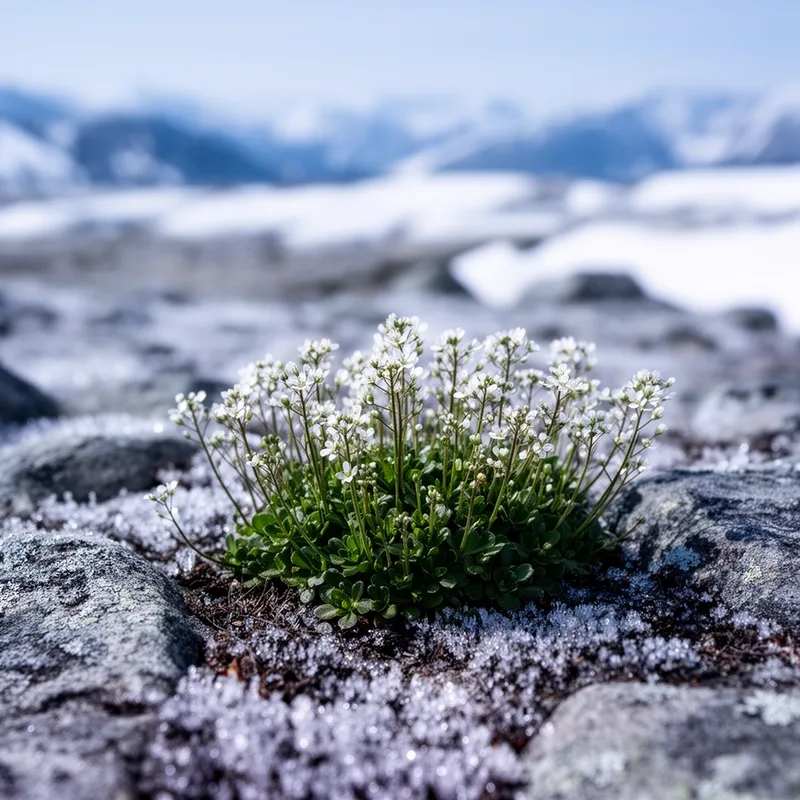
genus Draba
- noun
- /ˈdʒɛnəs ˈdrɑːbə/
- Specialized
- The genus Draba comprises many species that thrive in Alpine and Arctic environments.
Examples
-
Botanists studied the genus Draba to understand how plants adapt to cold climates.
-
Several members of the genus Draba are commonly called whitlow-grasses due to their appearance.
-
The genus Draba includes many species of whitlow-grasses.
-
Many botanists study the genus Draba for its unique adaptations.
-
Botanists studied the genus Draba to understand how plants adapt to cold climates.
-
Several members of the genus Draba are commonly called whitlow-grasses due to their appearance.
-
The genus Draba comprises many species that thrive in Alpine and Arctic environments.
Surface Forms
Morphology
The phrase is fully compositional: 'genus' names a biological grouping and 'Draba' is the taxon label, so the meaning 'the genus called Draba (a group of related plants)' follows directly from the constituents. This construction is a standard, cross-linguistic scientific naming pattern and would be understandable to a B1 learner who knows both words.
Etymology
Genus Draba may come from an old Greek word for a small herb, and the name Draba was given by plant scientists to a group of tiny, cushion-like plants. So genus Draba refers to this group of low, tufted herbs often called 'whitlow-grasses' because they grow close to the ground.

