
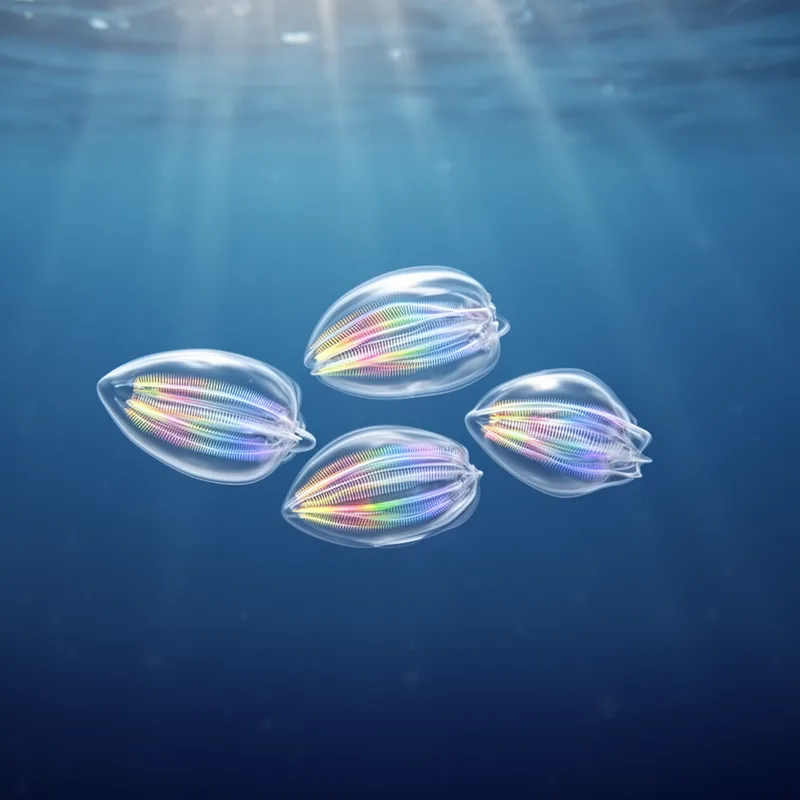
genus Beroe
- noun
- /ˈdʒɛnəs bɛˈroʊ/
- Specialized
- All members of the genus Beroe lack tentacles, distinguishing them from other ctenophores.
Examples
-
The genus Beroe includes several species of comb jellies found in marine environments.
-
Researchers studied the feeding habits of animals in the genus Beroe.
-
The genus Beroe is known for its unique gelatinous structure.
-
Many researchers study the genus Beroe to understand its ecological role.
-
The genus Beroe consists of various species that inhabit the open ocean.
-
Scientists classify the genus Beroe as part of the class Nuda within Ctenophora.
-
Understanding the genus Beroe helps researchers learn more about marine biodiversity.
Synonyms


 1
9.9
A group of comb jellies that have no tentacles
Surface Forms
Morphology
The meaning is directly compositional: 'genus' denotes a taxonomic rank and 'Beroe' is the name of the organism group, so together they mean the biological genus named Beroe. This follows a standard, cross-linguistic scientific naming pattern (genus + name), making it immediately understandable to learners who know both constituents.
Etymology
Genus Beroe may come from the name of a Greek 'sea nymph' called Beroe, which gives a simple picture of a creature of the sea. That's why today genus Beroe is the name for a group of marine animals called 'comb jellies'.