
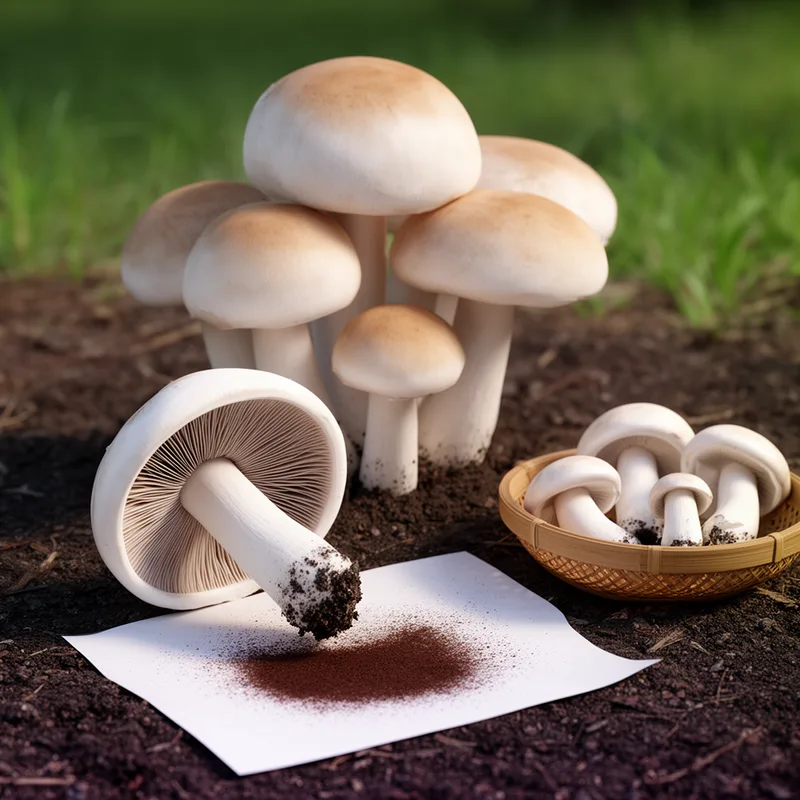
genus Agaricus
- noun
- /ˈdʒɛnəs əˈɡɛrɪkəs/
- Specialized
- Some species within the genus Agaricus are prized for their edibility, while others can be toxic.
Examples
-
The genus Agaricus includes many edible mushrooms.
-
Many chefs prefer using varieties from the genus Agaricus.
-
Biologists often study the genus Agaricus to learn more about fungal diversity and classification.
-
The commercial cultivation of genus Agaricus has made mushrooms widely available throughout the world.
-
Biologists often study the genus Agaricus to learn more about fungal diversity and classification.
-
Some species within the genus Agaricus are prized for their edibility, while others can be toxic.
-
Many chefs prefer using varieties from the genus Agaricus for their culinary dishes.
Synonyms

A group of mushrooms that includes common edible ones such as the button mushroom
Surface Forms
Morphology
This is a straightforward taxonomic combination: 'genus' (a biological rank) plus the proper name 'Agaricus' yields 'the genus named Agaricus.' A learner who knows both constituents can directly infer it denotes that group of related mushroom species, and taxonomic noun + name constructions are compositional and cross-linguistically transparent.
Etymology
Genus Agaricus comes from an old Greek word agarikon that meant a kind of 'mushroom'. So the parts genus ('group') and Agaricus ('mushroom') together name the group of common mushrooms with gills, which is why the term refers to the familiar edible and related kinds today.

