
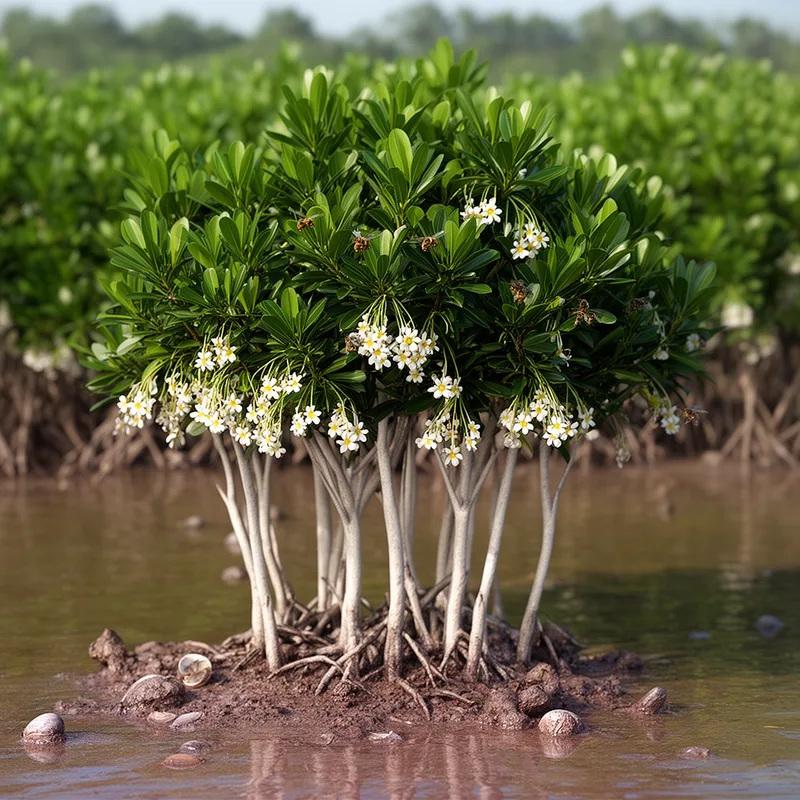
genus Aegiceras
- noun
- Specialized
- The genus Aegiceras is adapted to the brackish environments of coastal mangroves.
Examples
-
The genus Aegiceras includes several species found in mangrove ecosystems.
-
The flowers of the genus Aegiceras are small and fragrant, attracting many kinds of pollinators.
-
Scientists discovered a new species within the genus Aegiceras along the northern coast of Australia.
-
Did you know that genus Aegiceras is important for coastal protection?
-
The genus Aegiceras thrives in the unique conditions of mangrove habitats.
-
Research shows that the genus Aegiceras can withstand high levels of salinity.
-
Many species within the genus Aegiceras play a crucial role in coastal ecosystems.
Synonyms
A small tropical tree or shrub that grows by rivers and coasts
Surface Forms
Morphology
The phrase is a straightforward composition of 'genus' (a biological rank grouping related species) and the taxon name 'Aegiceras' meaning a group of tropical mangrove shrubs/trees, so the overall meaning is directly derivable from the constituents. This follows a standard scientific naming pattern (genus + name) that is cross-linguistically transparent, so a learner who knows both words will understand the MWE.
Etymology
Genus Aegiceras comes from Greek parts aegi- and -ceras, which mean 'goat' and 'horn' because the plant's long, curved fruits look like small horns. That's why this name fits the group of mangrove shrubs and small trees.

