
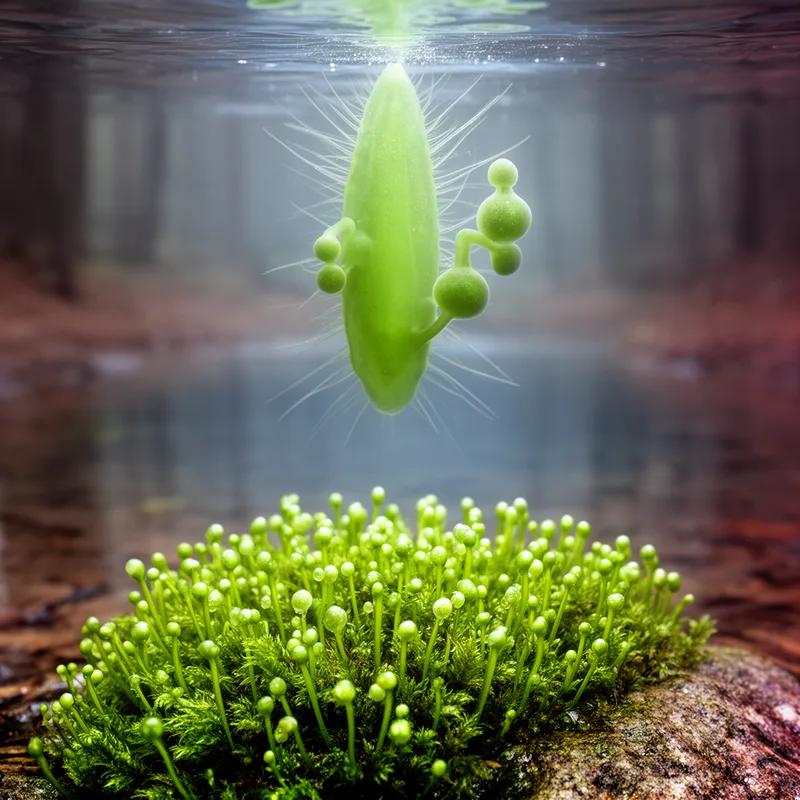
gemmiparous
9.9
Producing new plants or simple animals by growing small buds, like mosses and hydra
- adjective
- /ˌdʒɛmɪˈpɛrəs/
- Specialized
:
gemmiparo
- Certain species of freshwater hydra are "gemmiparous" and can produce new individuals through budding.
Examples
-
Severed or injured vegetative tissue is capable of generating "gemmiparous" plantlets in several aquatic species, such as lake cress (Neobeckia aquatica).
Academic text (1996) -
The jade plant is known for being "gemmiparous", as it creates small buds that can grow into new plants.
-
In nature, some fungi exhibit "gemmiparous" reproduction, forming buds that develop into new fungal organisms.
Synonyms
9.9
Having small parts that grow into new plants without seeds
includes reproduction by buds or gemmae and also applies to some simple animals
Surface Forms
gemmiparous positive
Morphology
Etymology
Gemmiparous comes from the Latin gemma ('bud') and the part -parous ('bearing'), a root related to the word parent. So, a gemmiparous plant or simple animal makes new ones by producing small buds.

