
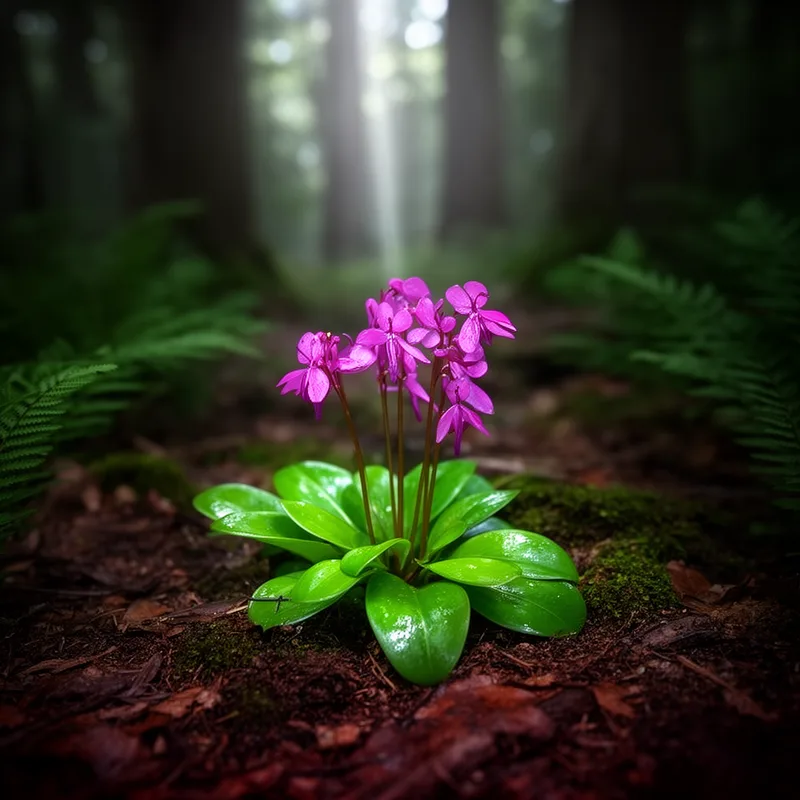
gaywings
- noun
- /ˈɡeɪˌwɪŋz/
- US
- She bent down to admire the rosy-purple flowers of the gaywings nestled among the ferns.
Examples
-
The gaywings plant is known for its unique winged sepals and wintergreen-like leaves.
-
The delicate gaywings blossomed along the forest path in early spring.
-
Botanists noted that gaywings prefer shady, moist woodlands for optimal growth.
-
The gaywings bloom beautifully in the spring.
-
I saw some gaywings growing near the hiking trail.
-
In early spring, the gaywings display vibrant rosy-purple flowers in the forest understory.
-
While hiking through the woods, I was delighted to see gaywings thriving in the shaded areas.
Synonyms
A low eastern North American plant with leaves like wintergreen and rosy-purple flowers with wing-like parts
A small flowering plant from eastern North America with pink-purple flowers and leaves like wintergreen

A low plant from eastern North America with rosy purple flowers and shiny green leaves
A small forest plant with leaves like wintergreen and pink-purple flowers
Surface Forms
Morphology
Etymology
Gaywings breaks into gay and wings. Gay means 'bright' or 'cheerful' and wings points to the flower's wing-shaped petals, so the name helps you picture the plant as having 'bright little wings'.

