
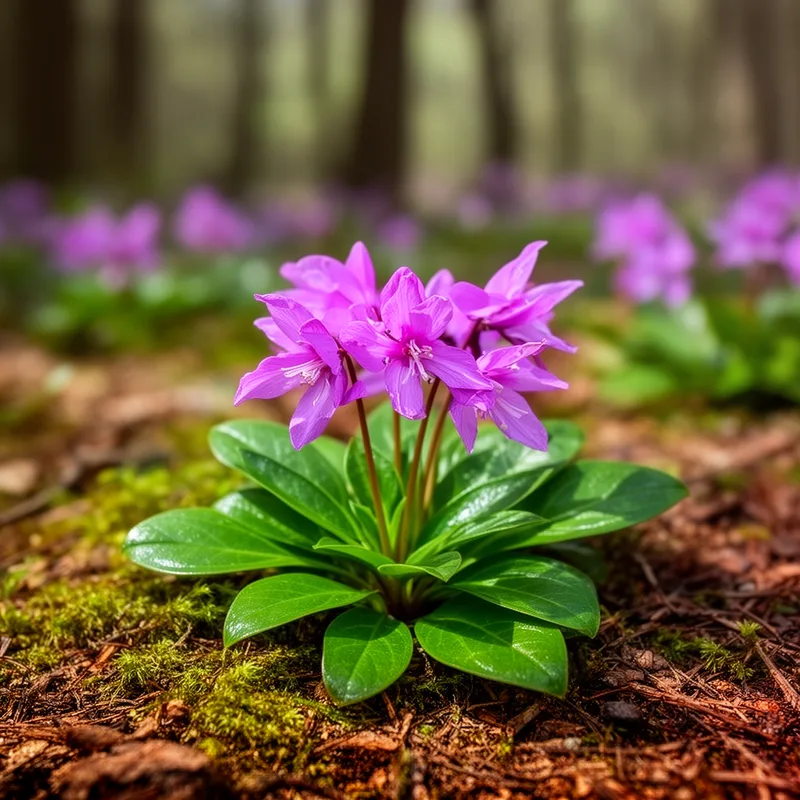
Polygala paucifolia
- noun
- Specialized
- She identified the tiny plant as Polygala paucifolia because of its wintergreen-like leaves and delicate blossoms.
Examples
-
The forest floor was carpeted with Polygala paucifolia, its purple flowers standing out among the green foliage.
-
Botanists often seek Polygala paucifolia in springtime for its distinctive winged sepals and rosy color.
-
Look at the lovely Polygala paucifolia flowers!
-
I found a beautiful Polygala paucifolia in the garden.
-
In spring, Polygala paucifolia blooms with striking rosy-purple flowers that attract many pollinators.
-
During a hike, we were excited to spot Polygala paucifolia along the trail, distinguished by its unique winged sepals.
-
Gardeners appreciate Polygala paucifolia for its attractive appearance and low-growing habit in shaded areas.
Synonyms
A small forest plant with leaves like wintergreen and pink-purple flowers
A small wild plant with rosy-purple flowers and shiny green leaves that grows in shady moist woods
A small flowering plant from eastern North America with pink-purple flowers and leaves like wintergreen

A low plant from eastern North America with rosy purple flowers and shiny green leaves
Surface Forms
Morphology
Polygala + paucifolia
This is a Latin scientific name: 'Polygala' signals a plant genus (so it transparently indicates a type of plant), but 'paucifolia' is a Latin species epithet (literally 'few‑leaved') that is not listed in the dictionary and is unlikely to be known by a B1 learner. The meaning is therefore only partially recoverable — speakers with botanical/Latin knowledge can infer 'few‑leaved Polygala', but the average B1 learner would not derive the specific sense from the constituents.
Etymology
Polygala paucifolia gets its name from old Greek and Latin words: Polygala was used for plants people thought could help cows give more milk (so think 'much milk') and paucifolia literally means 'few leaves', so the name helps you picture a Polygala with only a few leaves.

