

gangrenous
 4
9.1
4
9.1

- adjective
- /ˈɡæŋɡrɪnəs/
- Specialized
- His gangrenous feet no longer hurt, even where the covers rested on them.
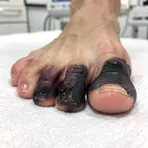
- gangrenous toe
- gangrenous limb
- gangrenous leg
Examples
-
His anguish is real, an awful, raw wound that has turned gangrenous.
Fiction book (1996) -
Fingers and toes could become gangrenous, he said, and require amputation.
Fiction book (2001) -
I fear it might be gangrenous.
-
We apparently expected it to live, but it only grew gangrenous.
Blog text (30) -
But some of this tissue looks gangrenous.
-
The ulcerated leg finally became gangrenous.
Fiction book (1995) -
A bad fall on a freezing night had resulted in a splintered thigh, which became gangrenous, costing him his leg.
Fiction book (1990) -
Brother-in-law's leg has gone gangrenous—he gave them ten dollars for a cab to the V.A. hospital last night.
Fiction book (1994) -
If left untreated, the wound became gangrenous, resulting in a dark discoloration and severe pain.
-
After the injury, the doctors warned that the tissue might become gangrenous if blood flow was not restored quickly.
Synonyms
 8
8.2
8
8.2
Tissue in the body that has died and no longer works

Part of the body that has died because of disease or injury
Antonyms

Compounds

- Specialized
A severe infection that makes body tissue die quickly, produces gas, and can be fatal
How Damaged

Surface Forms
Morphology
Etymology
Gangrenous comes from the old word gangrene, from Greek gangraina, which described a sore that 'eats away' the flesh. So, gangrenous means body tissue that has died or is decaying, as if it has been 'eaten away'.