
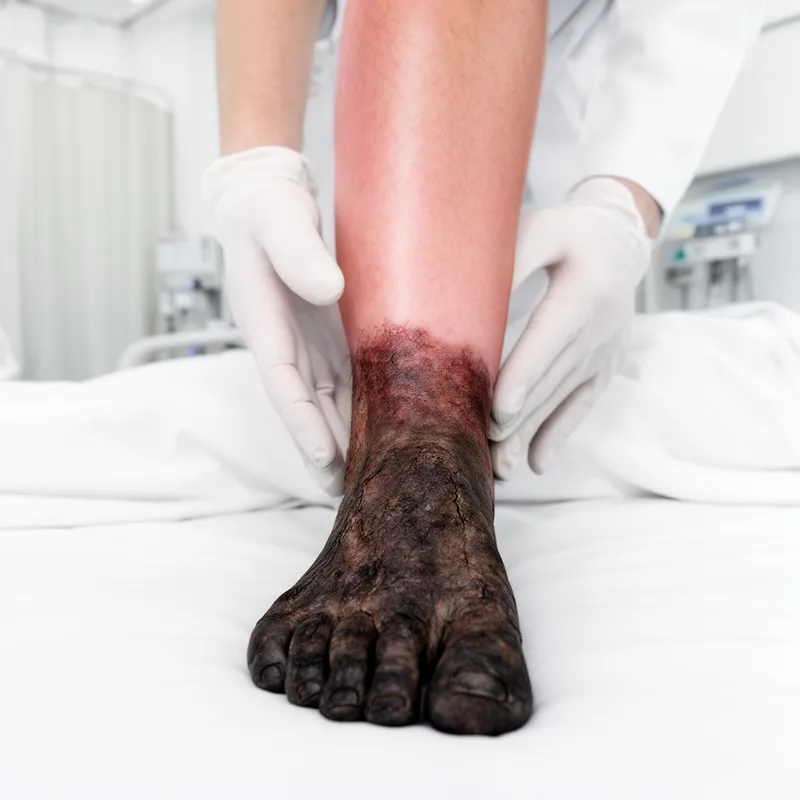
mortified
- adjective
- /ˈmɔːrtɪfaɪd/
- Specialized
- The injury was so severe that the tissue around the wound became mortified, leading to further complications.
Examples
-
After the accident, part of his arm became mortified, requiring immediate medical attention.
-
The doctors were concerned because the patient's leg showed signs of being mortified due to a severe infection.
-
Doctors treated the mortified area to stop the necrosis from advancing further.
-
If the tissue becomes mortified, amputation may be necessary to prevent the spread of infection.
-
The surgeon noted that the patient's foot was mortified and required urgent intervention.
-
The doctor confirmed that the tissue was mortified.
-
After the accident, the patient's leg became mortified.
Synonyms
 8
8.2
8
8.2

Tissue in the body that has died and no longer works
 4
9.1
4
9.1
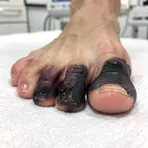
Tissue that has died and started to rot because it lost blood or became infected
How Damaged

Surface Forms
Morphology
Etymology
The word mortified comes from the root mort meaning 'death', the same root as in mortal and mortuary. So, when part of the body is called mortified, it means that tissue has died.