

gall gnat
- noun
- /ɡɔl næt/
- Specialized
- The gardener noticed that a gall gnat had created galls on the leaves of the young oak tree.
Examples
-
The leaves were covered with strange bumps caused by the gall gnat.
-
Gardeners often seek ways to protect their roses from gall gnats.
-
Careful inspection revealed that a gall gnat infestation was harming the plant.
-
The gall gnat is often found in gardens.
-
Many gall gnats can damage young plants.
-
To prevent damage to her plants, she used a special spray to control gall gnats.
-
The presence of a gall gnat in the garden indicated that the plants were under stress.
Synonyms
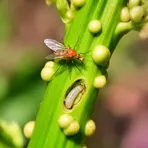
A small delicate fly whose young make small round bumps on plants

An insect that lays eggs in plants and causes swellings called galls where young insects grow
Surface Forms
Morphology
The compound 'gall gnat' is directly interpretable as a type of gnat associated with galls: combining 'gall' (a localized plant growth) with 'gnat' (a small fly) yields the meaning 'a small fly that induces or is associated with galls.' This is a straightforward noun–noun composition common in English and cross-linguistically, so a B1 learner who knows both constituents can reasonably infer the MWE's meaning.
Etymology
Gall gnat names a tiny, mosquito-like fly that makes plant bumps called 'galls' by laying eggs so the plant grows a small shelter for its young. So gall (the bump) + gnat (the small fly) helps you remember it means a little fly that causes those strange bumps on plants.

