
furfuraldehyde
- noun
- /ˌfɜr.fjʊˈrælˌdɪ.haɪd/
- Specialized
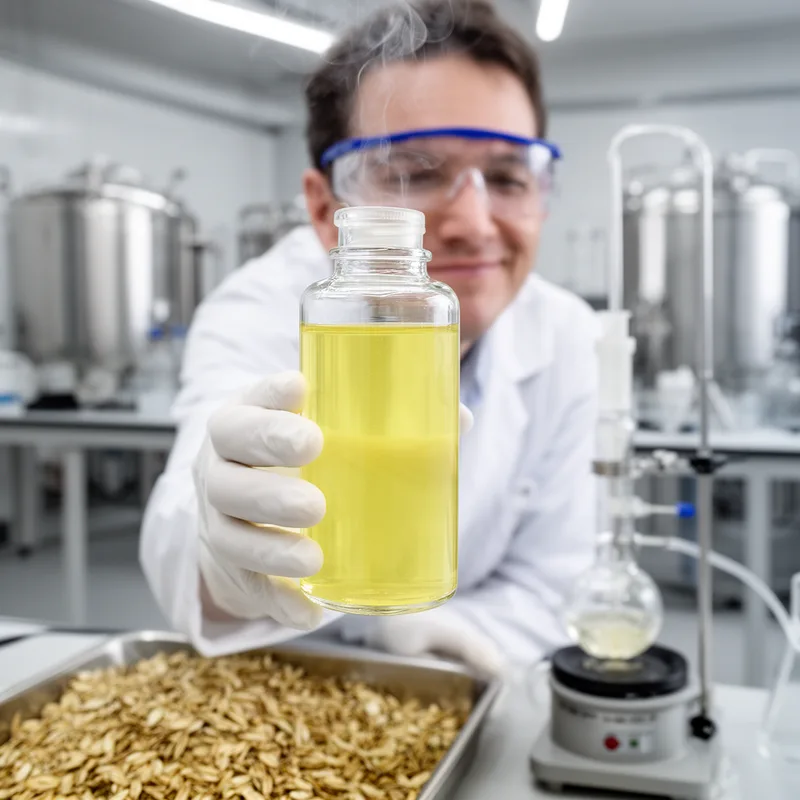
- Furfuraldehyde is derived from plant materials like corncobs and is commonly used as a solvent in various applications.
Examples
-
Industrial chemists use furfuraldehyde as a precursor in the manufacture of resins and solvents.
-
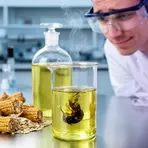
Corncobs are a common source of furfuraldehyde.
-
Furfuraldehyde is often produced during the processing of agricultural waste such as oat husks.
-
The distinct odor of furfuraldehyde can be detected even at low concentrations in the laboratory.
-
The chemist used furfuraldehyde in the experiment.
-
In the chemical industry, furfuraldehyde plays a crucial role in synthesizing furan compounds and resins.
-
The strong odor of furfuraldehyde makes it easily identifiable in laboratory settings.
Synonyms
 1
9.9

A clear or yellow liquid that has a strong smell and is made from plants to dissolve other substances
Surface Forms
Morphology
Etymology
Furfuraldehyde begins with furfural, from the Latin furfur meaning 'bran' or 'grain husk', and ends with aldehyde, the common name for a simple chemical group related to alcohol. So the name says it is an aldehyde made from bran or plant husks, which fits that this liquid is made from corncobs, oat hulls, and other agricultural waste.