

frailness
- noun
- /ˈfreɪl.nəs/
- An outsider, noticing her pale frailness, might have thought her ill.
Examples
-
She seemed frail beside him and aware of that frailness.
Fiction book (1992) -
Malina feels the frailness in her bones.
Fiction book (1993) -
Part of a feminine appearance is frailness and purity.
Academic text (1996) -
The reasons for this are varied and include the frailness of regime norms and the lack of networks of reciprocities and political exchange relations.
Academic text (1995) -
But really, Gee. " Cee Cee got out of the car and walked to where he was standing to give him a hug, startled when she did at the bony frailness under the layered clothes.
Fiction book (1991) -
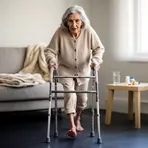
As she aged, her frailness became more apparent, requiring her family to provide extra support.
-
The elderly man's frailness made it difficult for him to walk without assistance.
-
Despite her frailness, she maintained a positive spirit and engaged in conversations with everyone around her.
Synonyms

 133
1.4
133
1.4

Lack of physical or mental strength that makes someone less able to act
 8
6.6
8
6.6
A weakness that makes it hard to do everyday things, often after illness or old age
 3
5.0
3
5.0
A state of being physically weak often from old age or illness

 1
4.8
1
4.8
A state of being physically weak because of age or illness
 1
8.2
1
8.2
Weakness in the body that follows illness or old age

A small amount of strength or force

A weak or slight state often about ideas and relationships
Antonyms


How Frail

Surface Forms
Morphology
Etymology
Frailness comes from the adjective frail, which goes back to Latin fragilis meaning 'easily broken', the same root as the English word fragile. So frailness is the state of being 'easily broken' or weak, which helps explain why we use it for people who are delicate in health or old age.