
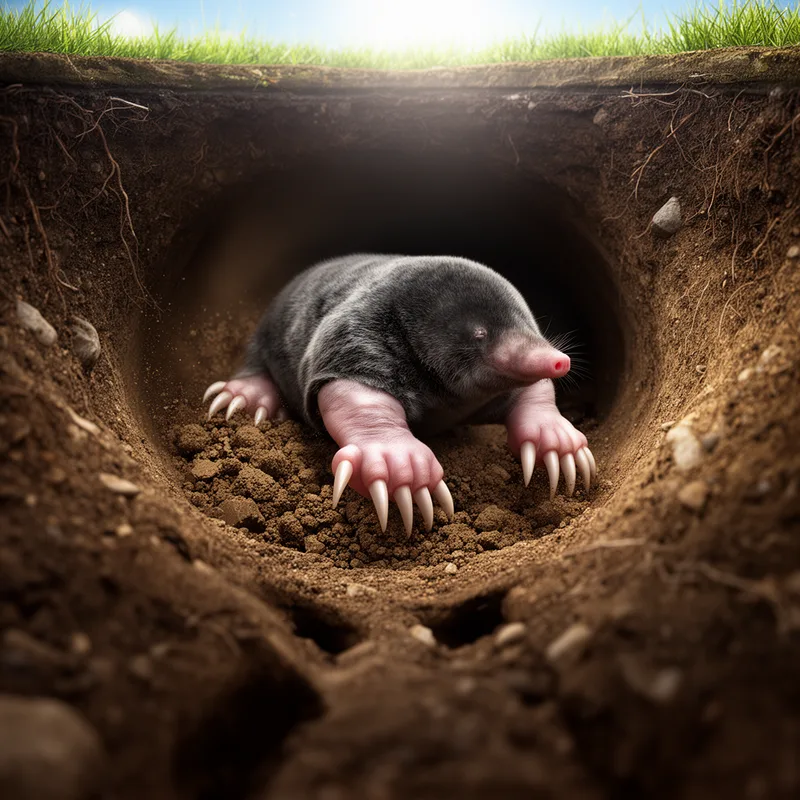
fossorial
- adjective
- /fɑˈsɔːriəl/
- Specialized
- Like other small fossorial snakes, this species is most often found in rotting logs, under rocks, in loose soil, or under leaf litter
Examples
-
Note how large its antennae are relative to its head (shown also in the photo above), and how it's constantly using them to feel its way about, as expected from a fossorial (underground) animal:
Blog text (20) -
Among the most fossorial (living underground) snakes in the Southeast, they are seldom seen above ground.
Blog text (12) -
So it's a very, very feeble excuse to mention him alongside fossorial mammals or, you know, extremophiles.
-
The fossorial rabbit uses its powerful claws to dig extensive burrows underground.
-
Elephants have fossorial adaptations, allowing them to dig for water during dry seasons.
-
Fossorial animals often create complex tunnel systems to protect themselves from predators.
Antonyms

Compounds

- Specialized
A mammal that lives underground and uses strong front legs to dig, like a mole
How Fossorial


Surface Forms
Morphology
fossorial = fossor + ial
The adjective is formed from a Latin combining form ('fossor' 'digger') plus the adjectival suffix -ial, which is not a recognizable English base for average learners, so the meaning cannot be reliably derived from familiar English morphemes.
Etymology
Fossorial comes from a Latin root meaning 'to dig' and is related to the word fossil, which is something 'dug up' from the ground. So a fossorial animal or limb is made for digging, with strong, shovel-like claws for living under the earth.