
cursorial
- adjective
- /ˌkɜrˈsɔriəl/
- Specialized
- The dog family thrived on such limb adaptations, which helped support a cursorial, or running, lifestyle in response to a changing environment.
Examples
-
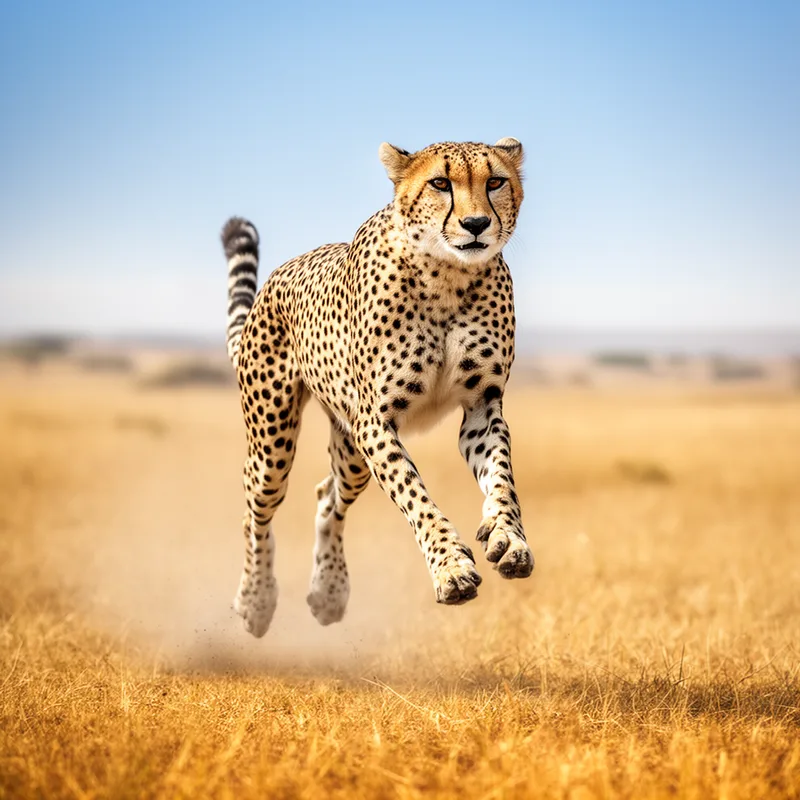
The cheetah is a cursorial animal, known for its incredible speed and agility while running.
-
To a large extent, the history of the dog family is a story of how a group of cursorial predators evolved, through speed and intelligence, to catch changing prey in a changing landscape.
Academic text (2008) -
This cursorial feature, not found in the other two canid subfamilies, became an advantage when the landscape opened up.
Academic text (2008) -
Its limbs indicate a cursorial lifestyle: Charles Knight's Mesonyx shown below.
Blog text (25) -
The rubber soles of his running shoes beat out an ancient cursorial rhythm, a telling vibration transmitted through the deck to the perforated steel walls of the shark pen and then to the coral foundations of the station some twelve fathoms below.
Fiction book (1997) -
Animals with cursorial adaptations, like long legs and lightweight bodies, are excellent runners in their habitats.
-
The kangaroo's cursorial limbs allow it to cover large distances quickly while escaping predators.
Antonyms




Surface Forms
Morphology
cursorial = cursor (opaque) = cursor + ial
Although formed by a regular suffixation (cursor + -ial), the base sense 'cursor' ('runner') is not part of general modern English (learners mostly know 'cursor' as a computer pointer), so the meaning 'adapted for running' is not transparently derivable for most learners.
Etymology
The word cursorial comes from the Latin cursor 'runner' and currere 'to run', the same root you see in the word course. So, cursorial means 'built for running', used for animals or legs that help them move quickly.