
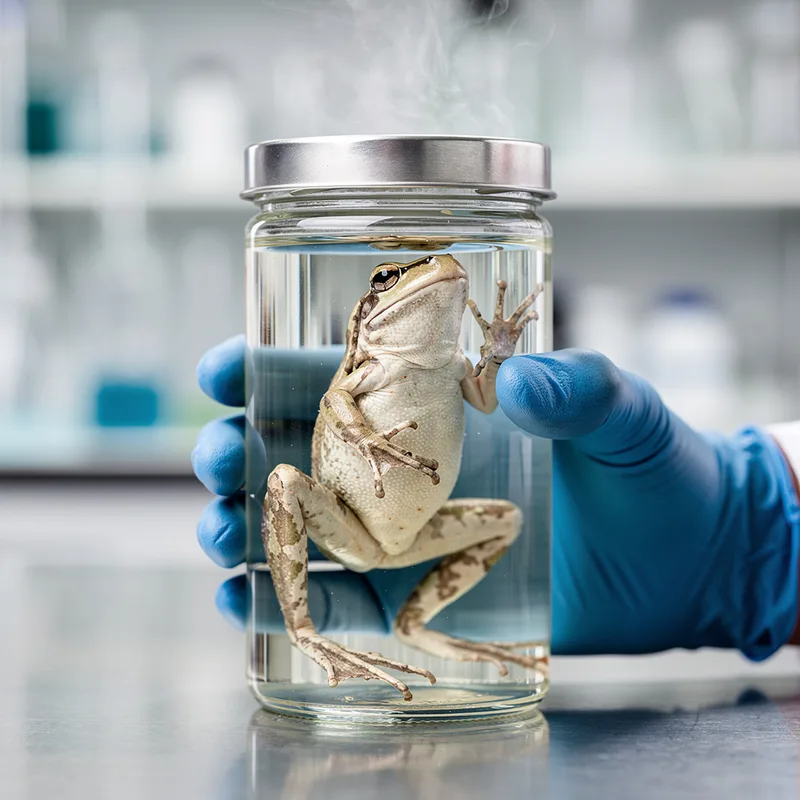
formaldehyde
 26
6.8
26
6.8

- noun
- /fɔrˈmælˌdɪhaɪd/
- Specialized
- Made without toxins, free from pesticides, formaldehyde and other harsh chemicals.
- formaldehyde solution
- polymerized formaldehyde
- fixed in formaldehyde
Loading YouTube…
Watch on YouTubeAnd they also have almost absolutely no formaldehyde, which is very hard to find.
- And they also have almost absolutely no formaldehyde, which is very hard to find.
- And they would sit there at that table and eat a few tablespoons of formaldehyde and see what happened.
- This can be converted into formaldehyde.
- So we're wearing it right, The yoga pants full of phthalates and and formaldehyde.
- So he jerks off with like formaldehyde fused Peppers.
- And the answer is that formaldehyde has a radio frequency attached to it.
- OK, well, jaundice will react with formaldehyde.
- What a smell, that rotten insides and the formaldehyde.
Examples
-
Yeah, You can smell the formaldehyde carpets.
-
Everything, your clothes, your hair, your skin, still exuded formaldehyde hours later.
Fiction book (1997) -
And they also have almost absolutely no formaldehyde, which is very hard to find.
-
And watch out for the formaldehyde.
-
Boots had the doctor put her foot in a jar of formaldehyde so she could bring it home.
Fiction book (2000) -
For RelA ChIP, BMDMs were subject to crosslinking with 1% formaldehyde for 10 minutes at room temperature.
Academic text (2017) -
However, emissions of two high-volume chemicals, formaldehyde and chloroethane, have increased substantially.
Academic text (1991) -
Plankton samples were preserved using a borax-buffered solution of 4% formaldehyde and seawater.
Academic text (2018) -
The biopsy specimens were fixed in 10% buffered formaldehyde, and paraffin blocks were prepared for histological assessment.
Academic text (2012) -
The scientist used formaldehyde to preserve the tissue samples for further study.
Synonyms

A colorless poisonous gas that people use to kill germs and preserve things
Compounds

- Specialized
A plastic made from vinyl formaldehyde used in paints and glues
- Specialized
A hard clear plastic made from chemicals that people use to make finishes, glues, and covers
Surface Forms
Morphology
Etymology
Formaldehyde is made from formic, a word that meant 'ant' because formic acid was first found in ants, and aldehyde, a chemical name for a strong, sharp-smelling substance. So formaldehyde is a strong, sharp-smelling, poisonous chemical related to formic acid, which helps explain its use as a preservative.