
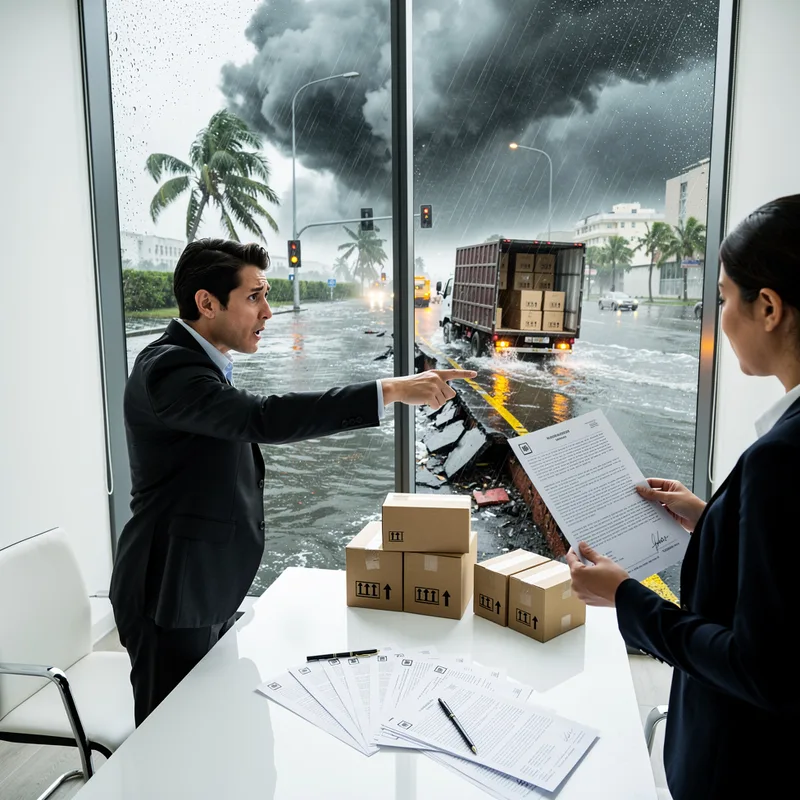
force majeure
 4
9.8
4
9.8

- noun
- /fɔrs məˈʒɜr/
- Formal
- In cases where a significant number of attendees can't make it due to the storm, it's important that a force majeure clause allows for partial performance to be covered, says attorney James Goldberg, principal, Goldberg and Associates, Washington, D.C.
- force majeure clause
- force majeure language
Examples
-
Libya declares "force majeure" regarding oil exports.
Blog text (6) -
FB, anyone signing a contract now should insert a force majeure clause.
Blog text (6) -
I would appreciate hearing from lawyers about the current use of force majeure.
Blog text (6) -
I suspect it required force majeure and some form of crisis to alter human behavior.
Blog text (29) -
Listen, Lieutenant, you may know this and you may not, but in the law there's a thing called force majeure.
-
The US District Court, Northern District, found that force majeure does not extend leases.
Blog text (25) -
For example, a new duty of care is causing businesses to take second looks at force majeure clauses in most commercial contracts.
Academic text (2002) -
Would it be possible to claim force majeure as a cause for being unable to meet debt obligations as the conditions under which one committed to the debt payment no longer exist?
Blog text (6) -
The government routinely mitigates loss due to force majeure incidents.
Blog text (19) -
The contract included a force majeure clause to protect the parties from unforeseen natural disasters.
Synonyms
 ∞
1.0
∞
1.0
A sudden event that causes great damage, loss, or failure
 176
7.0
176
7.0
A sudden terrible event that causes great damage and suffering
 19
6.8
19
6.8
A natural event like a flood or earthquake that cannot be prevented by people
A strong natural event like an earthquake or flood that you cannot stop and that stops normal life

An unexpected event you cannot stop even with great care
Surface Forms
Morphology
force + majeure
Although 'force' conveys power and 'majeure' can be recognized as related to 'major' in other languages, the precise legal meaning — an extraordinary, unforeseeable event that excuses contractual performance — is specialized and not fully deducible from the parts. The expression is a French loan used cross-linguistically (e.g., fuerza mayor), so learners may get a rough sense of 'great force' but not the full contractual nuance, making it partially but not fully transparent to a B1 learner.
Etymology
Force majeure comes from French meaning 'greater force', made of force and majeure. Imagine a huge storm or a war that is stronger than people and makes it impossible to keep a promise. That's why force majeure now means an event that 'frees someone from a contract'.