
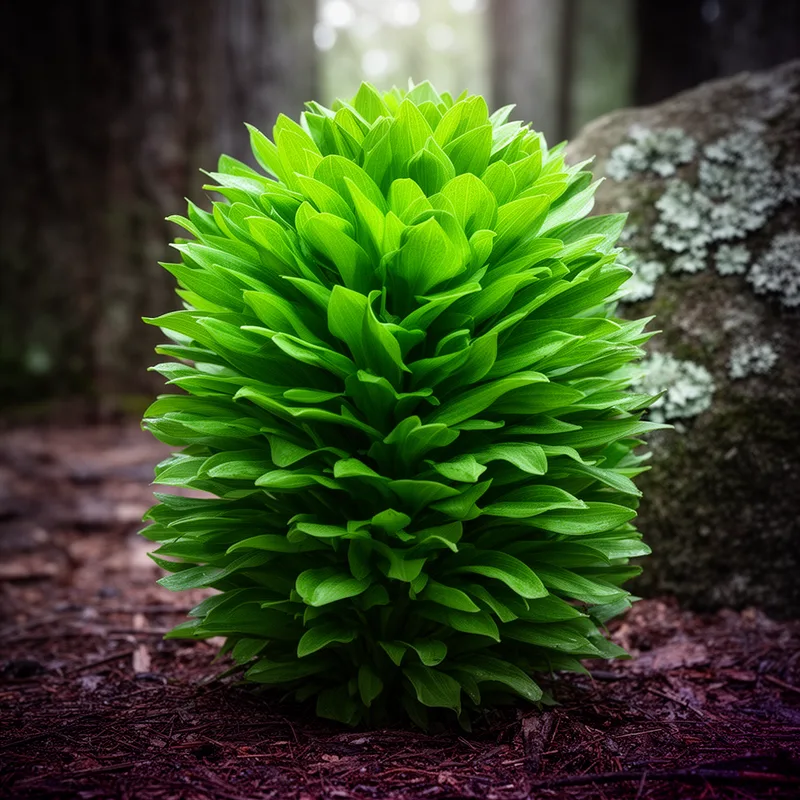
foliose
- adjective
- /ˈfoʊliˌoʊs/
- Specialized
- The foliose ferns in the garden create a lush, green atmosphere.
Examples
-
This species of foliose lichen thrives in moist environments and adds beauty to the rocks.
-
Figure 27. Section through a lobe of a foliose gelatinous lichen.
Academic text (2001) -
In their natural habitat, foliose plants often provide shelter for small insects.
Synonyms

Having many leaves or looking like leaves on plants
Covered with many leaves like a tree or bush

Having the shape or look of a leaf

Having the shape of a leaf
How Leafy


Surface Forms
Morphology
foliose = foliage (semi-transparent) = foli + ose
The adjective is formed with a leaf-related combining stem and the suffix '-ose' (meaning 'full of' in technical adjectives); the botanical sense is clear to those familiar with such stems but the combining form and suffix are not common in everyday English.
Etymology
Foliose comes from the Latin folium meaning 'leaf' and the ending -ose meaning 'full of'. So a foliose plant or lichen is literally 'full of leaves', which is why the word describes something with many leaves or leaf-like parts.