
fluidization
- noun
- /ˌfluːɪdaɪˈzeɪʃən/
- Specialized
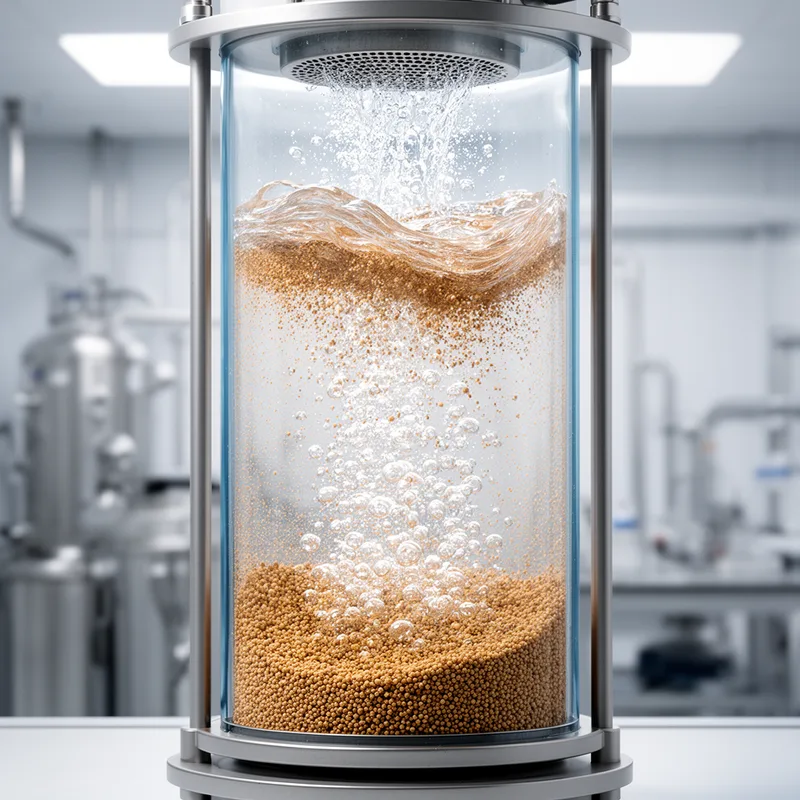
- During fluidization, gas is passed through a solid material, causing it to act like a fluid and enhancing its properties.
- fluidization regime
- fast fluidization
Examples
-
Reduced particle size increases the contact surface area, where fast fluidization drives more particles into the freeboard, increasing the contact time, which can finally be operated as a circulating fluidized bed.
Academic text (2018) -
Reducing the biomass particle size and upgrading the reactor into a fast fluidization regime are two possible methods of achieving increased gas-solid contact.
Academic text (2018) -
She has worked within the field of fluidization since 2000. She is employed as a professor at the University of South-Eastern Norway in the field of Process Technology.
Academic text (2018) -
As far as bed hydrodynamics are concerned, it was desired for the column to operate in the bubbling fluidization regime with homogeneous temperature and particle species distribution.
Academic text (2018) -
The gasification reactor is typically operated in the bubbling fluidization regime, while the combustion reactor is in the fast fluidization regime as a riser combustor.
Academic text (2018) -
The gasification reactor is typically operated in the bubbling fluidization regime, while the combustion reactor is in the fast fluidization regime as a riser combustor.
Academic text (2018) -
In the process of fluidization, solid particles behave like a liquid, allowing for better mixing and chemical reactions.
-
The fluidization of the powder improved its flow characteristics, making it easier to handle during production.
How Fluidized

Surface Forms
Morphology
Etymology
Fluidization comes from fluid meaning 'flow' plus -ize meaning 'make' and -ation meaning 'the act of'. So, fluidization can be remembered as 'making something flow', which fits the technical sense of making a solid act like a liquid or gas by passing a fluid through it.

